Interior wall panels have become a popular choice for residential renovations, commercial interiors, hospitality projects, and modern architectural designs. From decorative WPC wall panels to elegant PVC marble sheets and acoustic wood slat panels, today’s buyers can choose from a wide range of materials, textures, and finishes.
For importers, wholesalers, contractors, and interior design companies, sourcing interior wall panels from China offers access to diverse product ranges, customization options, and competitive manufacturing capabilities.
However, finding the right manufacturer requires more than comparing prices. Material quality, fire performance, moisture resistance, installation methods, and international shipping costs can significantly affect your investment.
This guide explores the most popular interior wall panels manufactured in China, their applications, and seven essential strategies for sourcing reliable products directly from Chinese factories.
Why Buy Interior Wall Panels from China?
China is a major manufacturing hub for decorative building materials, including PVC, WPC, wood-based, and composite interior wall panels.
Chinese manufacturers serve international construction suppliers, building material distributors, furniture companies, and renovation contractors.
Key advantages include:
- Competitive factory pricing: Direct sourcing can reduce intermediary costs, particularly for bulk orders.
- Extensive product selection: Buyers can explore wood-grain, marble-look, stone-effect, fabric-textured, and modern decorative finishes.
- OEM and ODM customization: Many factories offer custom dimensions, surface patterns, colors, and branded packaging.
- Scalable production: Established manufacturers can support recurring wholesale orders and large commercial projects.
- Integrated accessories: Suppliers may provide matching trims, corner profiles, and installation accessories.
Nevertheless, these advantages depend on choosing a qualified manufacturer and confirming product specifications before ordering.
6 Popular Types of Interior Wall Panels from China
Understanding the different panel materials helps buyers select products that meet their project’s design, durability, and budget requirements.
1. WPC Interior Wall Panels
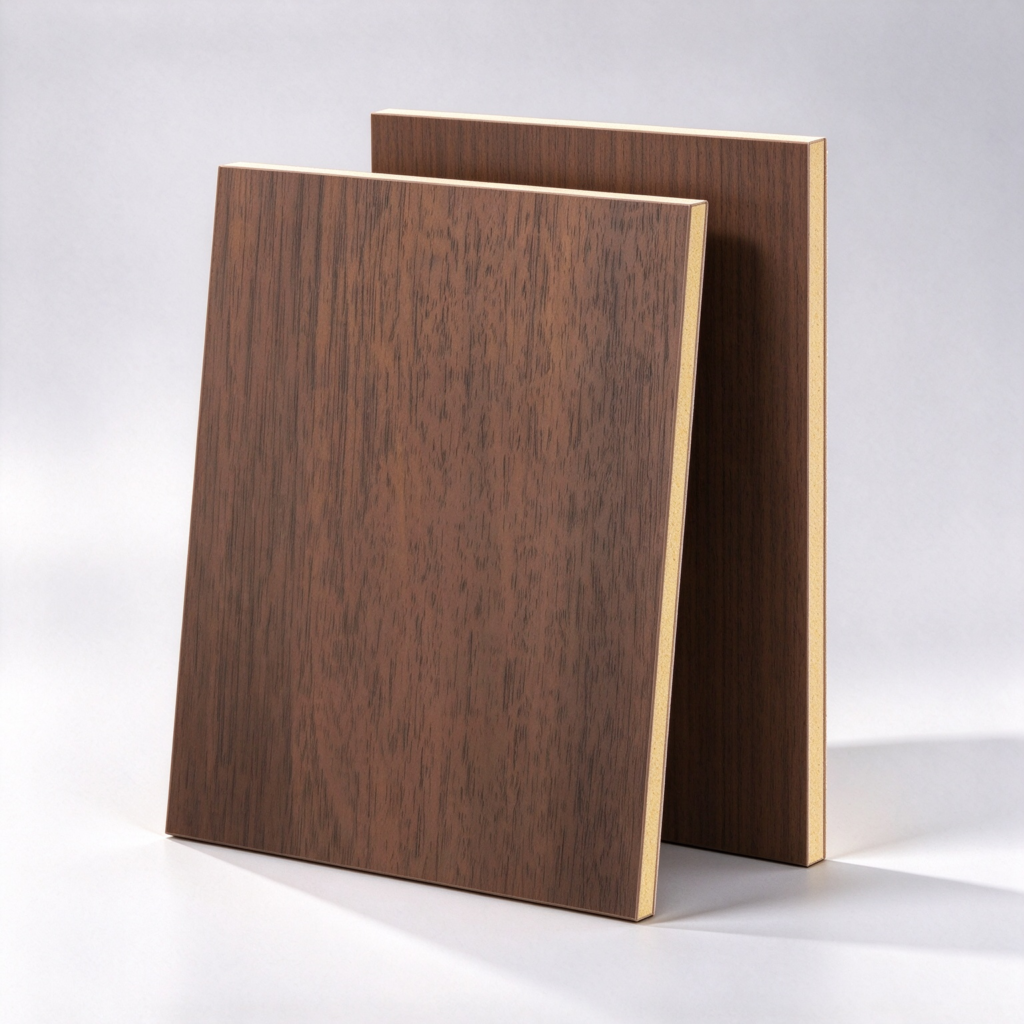
Wood Plastic Composite (WPC) wall panels combine wood-based materials and thermoplastics into decorative composite products. Their exact composition varies by manufacturer.
WPC panels are widely used for:
- Residential feature walls
- Hotel reception areas
- Retail store interiors
- Office decoration
- Restaurant wall finishes
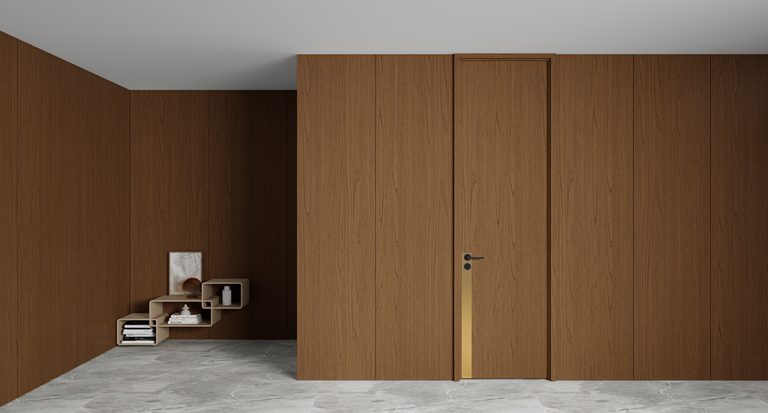
They are available in smooth, fluted, and three-dimensional designs, often with decorative wood-grain finishes.
Many WPC products offer easy-to-clean surfaces and moisture-resistant properties. However, buyers should verify the performance of the specific panel construction rather than assume all WPC panels are waterproof or suitable for wet areas.
Explore WPC wall panel options for different decorative applications.
2. PVC Interior Wall Panels
PVC wall panels are an alternative to traditional painted walls and some decorative tile applications.
Their relatively lightweight construction and variety of finishes make them attractive for renovation and commercial decoration.
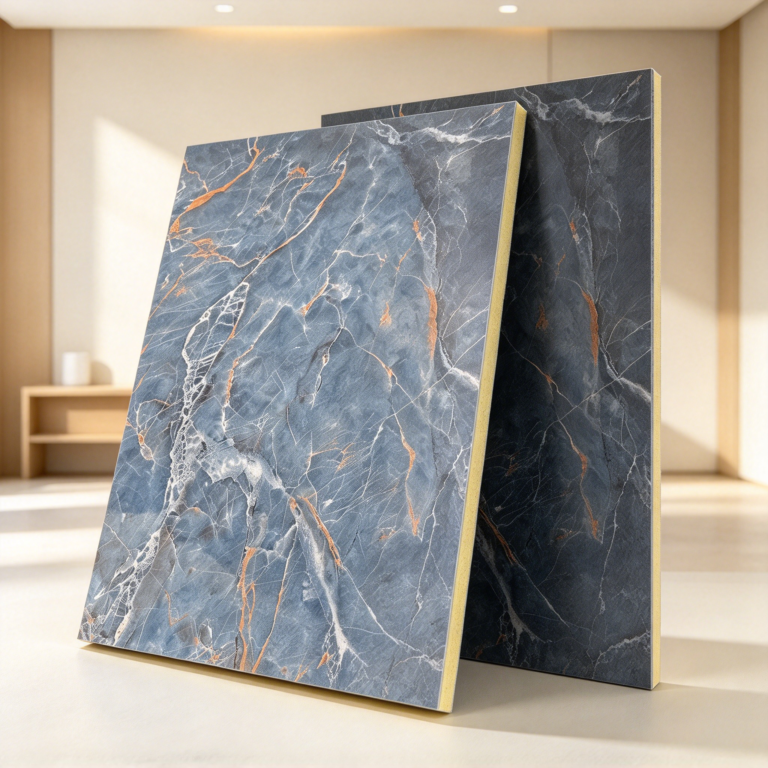
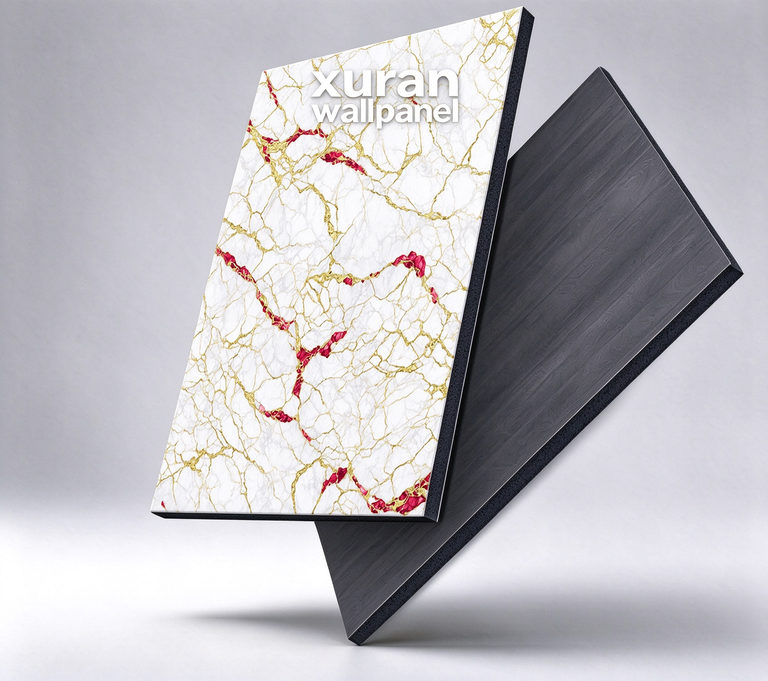
Popular options include PVC marble sheets, high-gloss decorative panels, and textured PVC wall coverings.
Depending on their construction and installation system, certain PVC panels can be suitable for kitchens, bathrooms, and other moisture-prone environments.
Best applications: Bathrooms, kitchens, commercial interiors, and decorative feature walls.
3. Carbon Crystal Wall Panels

Carbon crystal wall panels are marketed as decorative composite panels with smooth surfaces and various finishes.
However, the term carbon crystal does not identify one universally standardized material composition. Buyers should always request details of the core, surface film, backing, and adhesive system.
Certain products are designed for flat wall installation, while specific models may accommodate curved surfaces.
These panels are suitable for modern residential interiors, office projects, hospitality decoration, and decorative wall renovations.
Discover carbon crystal wall panels to compare available designs.
4. Acoustic Wall Panels
Acoustic wall panels help manage sound reflections within interior spaces.
Popular designs include decorative wood slat panels with acoustic backing materials.
They are commonly installed in:
- Conference rooms
- Home theaters
- Recording studios
- Hotels and restaurants
- Commercial offices
When purchasing acoustic panels from China, request independent acoustic test reports and confirm the tested installation assembly.
Decorative appearance alone does not guarantee sound absorption, and sound-absorbing panels should not be confused with complete soundproofing systems.
5. Multi-Ply Plywood Wall Panels
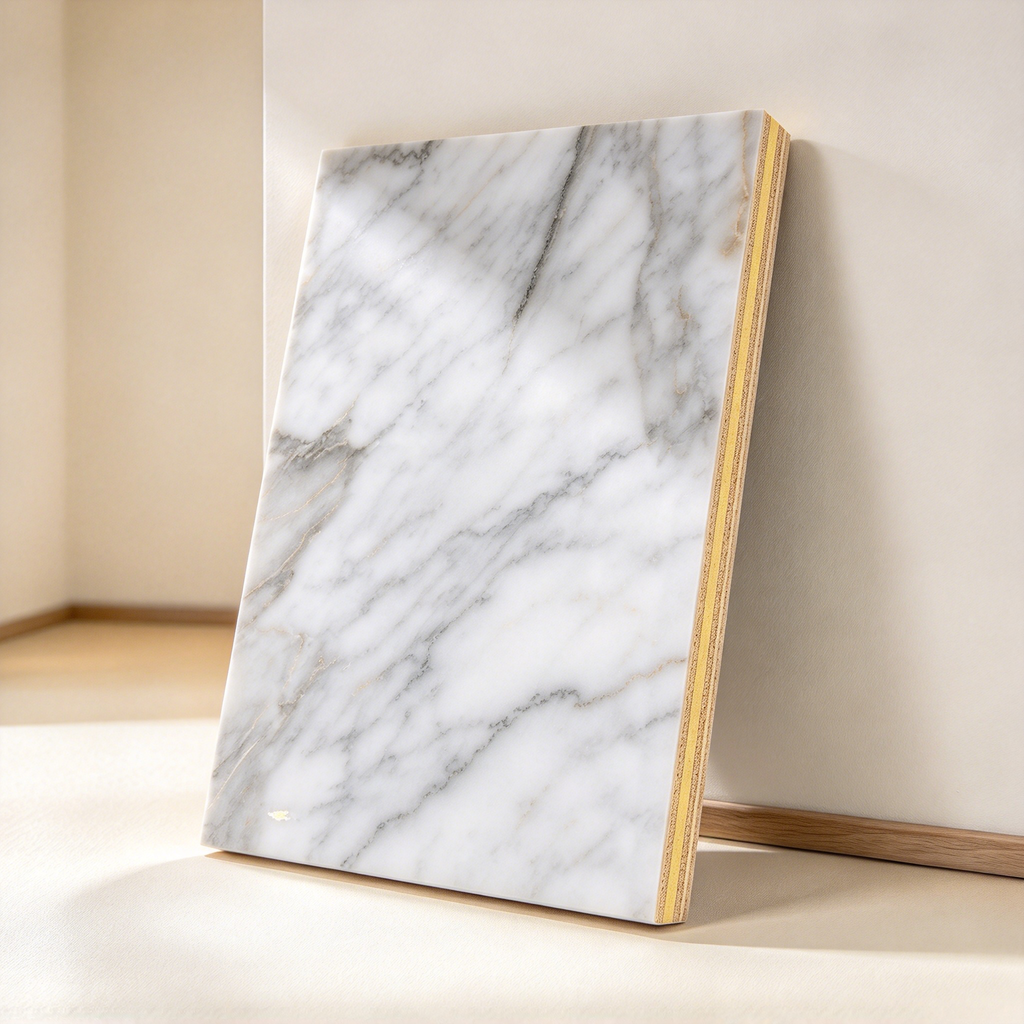
Multi-ply plywood provides a wood-based option for decorative interior walls, furniture applications, and customized architectural projects.
Manufacturers produce plywood with various veneer species, thicknesses, surface treatments, and grades.
Depending on the product, plywood may be used for wall cladding, cabinetry, partitions, and customized interior decoration.
Important purchasing considerations include bonding quality, moisture performance, veneer consistency, and formaldehyde emissions.
Explore multi-ply plywood products for additional options.
6. Fluted and 3D Decorative Wall Panels
Fluted and three-dimensional wall panels create depth and visual interest through raised patterns, grooves, and textured surfaces.
Manufacturers may produce these panels using WPC, MDF, PVC, or other composite materials.
Their applications include luxury residential spaces, office reception walls, restaurants, and retail interiors.
For commercial buyers, matching corner trims and consistent surface finishes are particularly important when installing panels across large wall areas.
7 Essential Tips for Buying Interior Wall Panels from China
Tip 1: Define Your Project Requirements
Before contacting manufacturers, create a clear purchasing specification.
Identify the panel material, thickness, dimensions, finish, installation environment, and required performance.
For example, panels intended for a hotel corridor may require different fire performance and impact resistance than decorative panels installed in a private bedroom.
Specify your expected order quantity and destination country as well. These details help suppliers prepare accurate quotations.
Tip 2: Choose a Reliable Wall Panel Manufacturer
Working directly with a reputable Chinese manufacturer can improve communication, product customization, and quality control.
However, not every supplier advertising factory-direct pricing actually operates its own production facility.
Before placing an order, verify:
- Business registration and manufacturing capabilities
- Factory address and production equipment
- Product specifications and available test reports
- Export experience and quality control procedures
- Sample availability and production lead times
Request factory photographs, production videos, and a live virtual factory tour when an in-person visit is impractical.
An independent factory audit can provide additional assurance for large orders.
Tip 3: Request Samples Before Bulk Ordering
Product photographs cannot fully demonstrate surface texture, material strength, or color accuracy.
Always obtain physical samples before confirming a major purchase.
Examine the sample’s thickness, finish, edge quality, dimensional consistency, and overall workmanship.
For decorative panels, compare multiple samples under the lighting conditions expected at the installation site.
After approval, retain a reference sample and require the factory to match the agreed specifications during production.
Tip 4: Verify Quality and Safety Requirements
Product compliance is especially important for commercial construction and international distribution.
Different wall panel materials may be subject to different testing and regulatory requirements.
For example:
- Fire performance: Request applicable reaction-to-fire classifications, such as EN 13501-1 or ASTM E84 test results, where relevant.
- Formaldehyde emissions: Certain composite wood products imported into the United States must comply with EPA TSCA Title VI requirements.
- Moisture performance: Verify water absorption, swelling, or dimensional stability test results where relevant.
- Mechanical performance: Review impact resistance, bending strength, and fastening suitability for the intended use.
Consult the U.S. EPA’s composite wood regulations and the European Commission’s construction product guidance when applicable.
A test report should identify the actual product tested. One panel’s certification should never be assumed to cover an entire product range.
Tip 5: Compare Total Costs, Not Just Factory Prices
The lowest quotation does not always represent the best purchasing decision.
Two visually similar wall panels may differ in thickness, material composition, surface quality, packaging, and durability.
When evaluating quotations, compare the complete landed cost:
Total landed cost = Product cost + Packaging + Freight + Insurance + Customs duties + Import charges + Local delivery
Request quotations using clearly defined Incoterms, such as FOB or CIF, and confirm exactly which charges each supplier includes.
Also consider potential breakage, installation waste, and replacement costs.
Tip 6: Confirm MOQ and Customization Options
Minimum order quantities vary according to material, design, production process, and surface finish.
Standard colors and existing designs may have lower minimum order requirements than customized products.
If you plan to introduce a private-label wall panel collection, discuss:
- Customized dimensions
- Exclusive decorative finishes
- Logo and packaging design
- Matching accessories
- Sample development costs
- Repeat-order consistency
Ask whether the factory permits mixed designs within the same shipment. This can help distributors offer broader product collections without overstocking individual designs.
Tip 7: Arrange Quality Inspection Before Shipping
A pre-shipment inspection helps identify defects before the products leave China.
Inspectors should compare finished products with the approved samples and purchase specifications.
For wall panels, inspections commonly include dimensional measurements, surface appearance, color consistency, edge condition, packaging, and quantity verification.
Buyers should also confirm carton markings and pallet protection.
For large commercial orders, consider production-stage inspections rather than relying exclusively on final inspections.
Shipping Interior Wall Panels from China
Shipping costs can significantly influence the profitability of imported wall panels.
Because many panels are long, wide, or relatively fragile, packaging and container loading require careful planning.
Sea freight is generally a practical option for bulk shipments, while smaller sample orders may travel by express courier or air freight.
Before shipping, confirm the panel dimensions, packing configuration, gross weight, total cubic volume, and destination port.
Common shipping arrangements include:
- FOB: The seller delivers the goods on board the vessel at the agreed port.
- CIF: The seller arranges and pays for freight and insurance to the named destination port under the applicable Incoterms.
- DDP: The seller takes responsibility for delivery, including import clearance and applicable duties, subject to the agreed terms.
For oversized decorative panels, request a detailed loading plan to reduce the risk of bending, scratches, and transit damage.
Importers should also verify customs classifications and destination-country documentation before shipment.
Frequently Asked Questions About Interior Wall Panels from China
1. Are interior wall panels from China good quality?
Yes, Chinese manufacturers can produce high-quality interior wall panels, but quality varies between suppliers and product ranges.
The most reliable approach is to compare materials, request samples, review relevant test reports, and inspect production before shipment.
A supplier’s manufacturing experience and quality control practices are more meaningful than its advertised price alone.
2. What is the best material for interior wall panels?
The best material depends on the application.
WPC panels are popular for decorative features, PVC panels offer versatile surface finishes, acoustic panels help manage reverberation, and plywood provides wood-based design flexibility.
Buyers should evaluate the installation environment, required performance, maintenance needs, and overall project budget before selecting a material.
3. Can I buy interior wall panels directly from Chinese factories?
Yes. Many Chinese wall panel manufacturers sell directly to international importers, wholesalers, contractors, and commercial buyers.
Direct factory purchasing may provide better access to customization and manufacturing information.
However, buyers should confirm minimum order quantities, payment terms, production schedules, and export arrangements.
4. Are Chinese interior wall panels waterproof and fireproof?
Not all interior wall panels are waterproof or fire-resistant.
Performance depends on the panel material, construction, surface treatment, and installation system.
A moisture-resistant decorative panel may not be suitable for continuous water exposure.
Similarly, marketing terms such as fireproof should not replace verified test results and required fire classifications.
Always request documentation appropriate to the intended building application.
5. How long does it take to manufacture and ship wall panels from China?
Production and shipping timelines depend on product type, order quantity, customization requirements, factory capacity, and destination.
Stock products may be available sooner than customized finishes requiring additional production.
Ocean transit also varies by route, vessel schedule, and port conditions.
Before paying a deposit, request a written production schedule and confirm the estimated shipping date with your freight forwarder.
Conclusion: Source Quality Interior Wall Panels from China with Confidence
Importing interior wall panels from China can create valuable opportunities for building material distributors, contractors, interior designers, and international wholesalers.
With an extensive selection of WPC, PVC, carbon crystal, acoustic, and plywood panels, buyers can find solutions for a wide range of residential and commercial applications.
However, successful sourcing depends on more than attractive designs and low factory prices.
By verifying manufacturer capabilities, requesting product samples, reviewing test documentation, and organizing reliable shipping arrangements, businesses can reduce purchasing risks and build stronger supplier relationships.
For companies seeking decorative wall panel solutions, Xuran Decoration offers a starting point for exploring wall panel products and discussing project-specific sourcing requirements.