Quick answer: To choose a reliable decorative wall panel manufacturer in China, evaluate primary manufacturing hubs in Zhejiang, Guangdong, and Shandong. Inspect material certifications like CE and ISO, order physical samples for acoustic and fire ratings, and establish clear terms on minimum order quantities, factory auditing, and container shipping logistics.
Sourcing interior and exterior architectural finishes globally requires careful supplier vetting and deep product knowledge. Partnering with a dedicated wall panel manufacturer in China gives developers, wholesalers, and interior designers access to massive manufacturing capacity and advanced composite engineering. Navigating this vast industrial ecosystem successfully requires a structured approach to regional specialization, quality compliance, and logistical execution.
Why Source From a Decorative Wall Panel Manufacturer in China?
Sourcing from a decorative wall panel manufacturer in China provides unmatched cost efficiency, massive production scalability, and rapid access to modern surface designs. Chinese factories leverage mature raw material supply chains to deliver competitive pricing without sacrificing engineering performance.
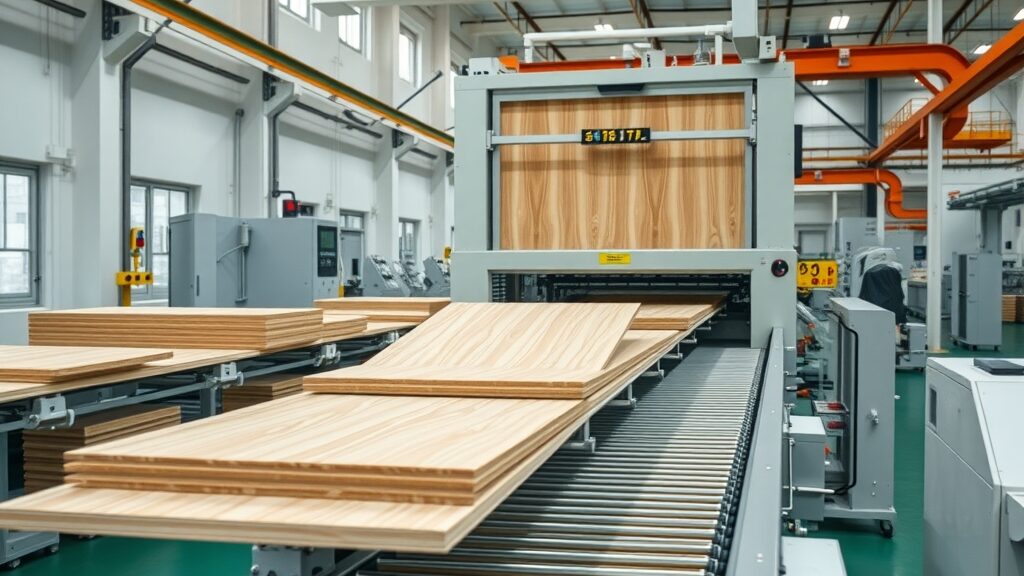
China accounts for a substantial share of global production for architectural wall coverings, acoustic surfaces, and composite cladding. The integration of local supply chains provides distinct commercial advantages:
- Raw Material Proximity: Key manufacturing hubs sit directly adjacent to plastic compounding facilities, recycled polyethylene terephthalate (PET) felt mills, and certified medium-density fiberboard (MDF) processors. This proximity shortens material replenishment cycles from weeks to days.
- Economies of Scale: High-output continuous extrusion lines and automated computer numerical control (CNC) profiling equipment allow facilities to run massive volume batches, bringing unit costs down significantly compared to regional fabrication shops in Europe or North America.
- Agile Surface Innovation: Factories rapidly adopt emerging interior design trends, transitioning from standard laminates to textured wood veneers, realistic sintered stone finishes, acoustic fluted slats, and co-extruded architectural panels within months of international trade shows.
Which Regions in China Produce the Best Decorative Wall Panels?
The primary manufacturing hubs for decorative wall panels in China are Zhejiang, Shandong, and Guangdong provinces, each specializing in distinct materials and processing technologies. Sourcing efficiency depends on matching your specific panel material with the corresponding regional manufacturing cluster.
Industrial clustering in China means that specific cities concentrate on particular materials, tooling technologies, and export corridors. Understanding these regional distinctions prevents buyers from approaching the wrong supplier base.
| Province / City | Primary Material Specialization | Key Manufacturing Strengths | Export Port |
|---|---|---|---|
| Zhejiang (Haining, Jiaxing) | Acoustic slat panels, PVC wall panels, integrated ceiling systems | High automation, advanced veneer lamination, massive PET felt processing | Ningbo / Shanghai |
| Shandong (Linyi) | Wood-plastic composite (WPC), engineered MDF, plywood substrates | Abundant timber processing, lower labor costs, heavy extrusion infrastructure | Qingdao |
| Guangdong (Foshan, Guangzhou) | Polyurethane (PU) stone, architectural metal panels, luxury custom joinery | High-end design, custom mold tooling, strict commercial architectural finishes | Shenzhen / Guangzhou |
For example, Haining in Zhejiang is the global nexus for acoustic slat wood panels mounted on sound-absorbing felt. If your project demands high-volume exterior co-extruded WPC fluted panels, Linyi in Shandong offers deep chemical processing and extrusion resources. Foshan in Guangdong is the preferred destination when procuring custom architectural metal claddings or ultra-realistic lightweight polyurethane faux stone slabs.
What Types of Decorative Wall Panels Are Manufactured in China?
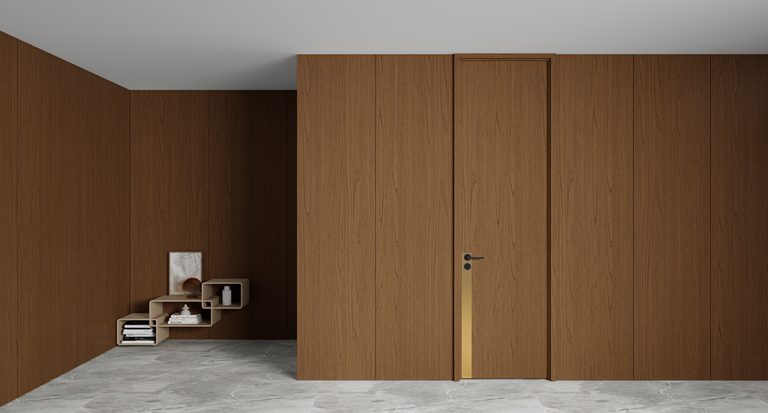
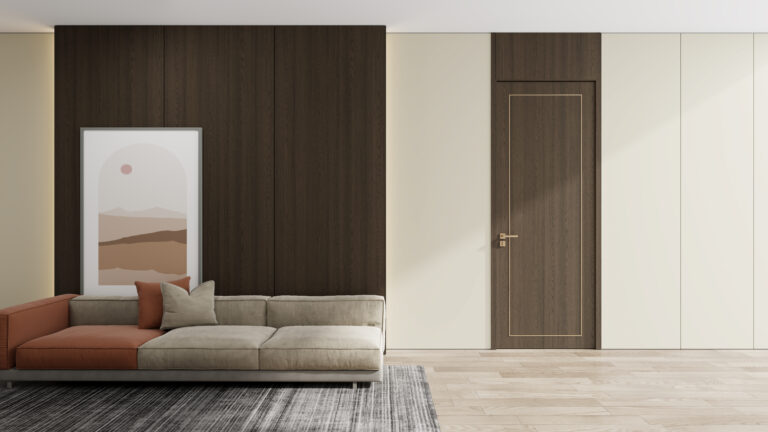
Chinese factories manufacture a comprehensive variety of decorative wall panels, including acoustic wooden slat systems, wood-plastic composite panels, polyurethane faux stone, and high-gloss PVC marble sheets. Each panel variant relies on specific substrates and finishes engineered for decorative and functional performance.
Before issuing requests for quotation (RFQs), buyers should identify the exact composite structure required for their project environment:
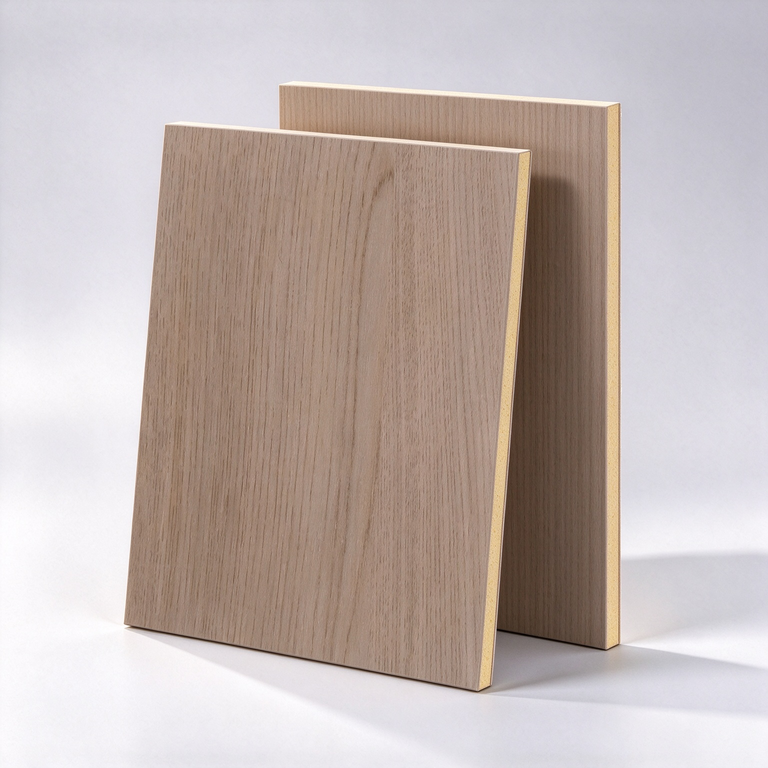
- Acoustic Slat Wood Panels: Composed of precision-cut MDF or solid wood slats faced with natural wood veneer (such as oak, walnut, or ash) or technical melamine foil, affixed to a recycled acoustic polyester felt backing. These panels combine decorative linear warmth with sound dampening (Noise Reduction Coefficient, or NRC, ratings typically ranging from 0.60 to 0.85).
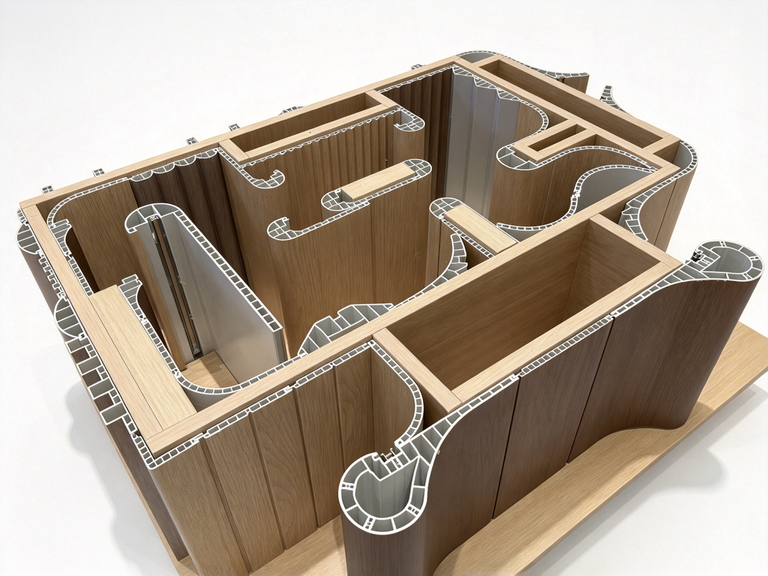
- Wood-Plastic Composite (WPC) Panels: Manufactured by extruding a blend of wood powder, thermoplastics (primarily PVC or HDPE), and functional additives. Available as hollow fluted interior wallboards or heavy-duty co-extruded exterior cladding featuring UV-resistant capping layers.
- Lightweight Polyurethane (PU) Stone: Molded from high-density polyurethane foam using real stone slabs as master casts. These mimic natural slate, limestone, or stacked rock while remaining featherweight, moisture-resistant, and installable using mechanical fasteners and structural adhesive.
- PVC Marble and UV Architectural Sheets: Rigid composite sheets made from calcium carbonate and polyvinyl chloride, covered with decorative film patterns and cured under high-intensity ultraviolet (UV) lacquer to simulate polished marble or monolithic terrazzo slabs.
How Do You Verify Factory Credentials and Quality Standards?
Verifying a Chinese wall panel factory requires authenticating their business license, separating genuine original equipment manufacturers (OEMs) from intermediary trading companies, and reviewing valid third-party lab test certificates. Inspecting documented compliance with fire safety and environmental emission standards protects your business from commercial and legal liability.

Conduct thorough due diligence before transferring tooling deposits or signing sales agreements:
- Examine the Business License (营业执照 – Yíngyè Zhízhào): Check the registered business scope. Direct manufacturing facilities feature phrasing such as “production,” “processing,” or “manufacturing” of composite materials, building materials, or plastic products. If the scope mentions only “wholesale,” “sales,” or “consulting,” you are dealing with a trading company.
- Validate Quality Management Standards: Ensure the facility operates under an active ISO 9001 quality management system. If sourcing wood substrates or natural veneers, request Forest Stewardship Council (FSC) Chain of Custody certification to ensure legal wood procurement.
- Audit Mandatory Lab Safety Tests: Interior architectural finishes must meet destination market building codes. Demand accredited lab test reports (such as SGS, Intertek, or TÜV) rather than internal factory summaries:
- Fire Behavior: ASTM E84 (Class A or B) for North America; EN 13501-1 (typically B-s1, d0) for the European Union.
- Formaldehyde Emissions: EN 717-1 (E0 or E1 certification) or compliance with the US EPA TSCA Title VI and California CARB Phase 2 standards.
- Hazardous Substances: RoHS and REACH testing to confirm the absence of heavy metal stabilizers (like lead) in PVC and WPC compounds.
What Are Typical Minimum Order Quantities and Lead Times?
Standard minimum order quantities (MOQs) for decorative wall panels typically range from 200 to 500 square meters for stock designs, while custom colors or profiles generally require full container loads (FCL). Average factory production lead times span 15 to 30 days after drawing approval and deposit receipt.
Order volumes dictate production efficiency. Extrusion and lamination lines operate continuously, meaning short runs generate unacceptable raw material scrap during color changeovers. Understanding how factories calculate MOQs enables more effective negotiation:
- Standard Catalog Profiles & Colors: If a factory routinely extrudes a popular profile (e.g., natural oak on black felt, or 160mm fluted WPC), they can often accommodate trial orders of 100 to 300 square meters by combining your run with an active domestic production batch.
- Custom Mold Extrusions: New tooling requires specialized extrusion dies and calibrators. For bespoke shapes, manufacturers typically demand a minimum of 1,000 to 3,000 meters per production run to amortize calibration waste and line setup costs.
- Lead Time Phases: Tooling fabrication takes 10 to 20 days. Producing sample approvals takes 5 to 7 days. Mass extrusion, surface finishing, cutting, and packaging for a 40-foot High Cube (40HQ) container generally requires 15 to 25 production days. Always build an additional two-week buffer around the annual Chinese New Year holiday, when plants shut down completely.
How Does Customization and OEM Production Work with Chinese Factories?
Customization and OEM production with a Chinese wall panel manufacturer involves sharing digital technical drawings, opening precision extrusion or molding tooling, and approving golden physical samples before batch processing. Factories support deep private-label packaging, tailored dimensions, and customized chemical formulations.
To launch a proprietary panel collection, follow this structured OEM engineering process:
- Technical Drawing and Specification Handoff: Provide detailed 2D CAD files (DWG/DXF) showing exact cross-sectional geometries, wall thicknesses, interlocking tongue-and-groove tolerances, and fastening channels. Supply 3D STEP files if producing complex PU stone textures or architectural 3D tiles.
- Tooling and Mold Development: For composite extrusions (WPC or PVC), the factory machines an extrusion die and vacuum sizing calibration units from alloy steel. Tooling costs generally range from modest amounts for simple PVC trim up to several thousand dollars for complex, multi-cavity co-extrusion dies. Many factories offer tooling fee rebates once your cumulative purchase volume passes agreed milestones.
- Golden Sample Sign-Off: The factory runs a trial extrusion and issues an initial sample (the “golden sample”). Inspect this sample for dimensional tolerance, density, grain clarity, gloss level, and corner resilience. Never authorize full mass manufacturing until you have signed and dated duplicate physical benchmark samples—one retained by you, one by the plant floor manager.
- Private-Label Packaging: Most manufacturers provide full OEM carton customization. You can supply print-ready artwork for outer corrugated boxes, edge protection guards, installation instructional leaflets, barcode labels, and brand stamps on the back of panels.
What Are Common Quality Control Pitfalls and How Do You Avoid Them?
Common quality control pitfalls in decorative wall panel manufacturing include batch-to-batch color variance, adhesive delamination, and warped interlocking joints. These defects can be mitigated by conducting mid-production inspections, defining strict tolerance parameters, and using third-party quality audits before balance payment release.
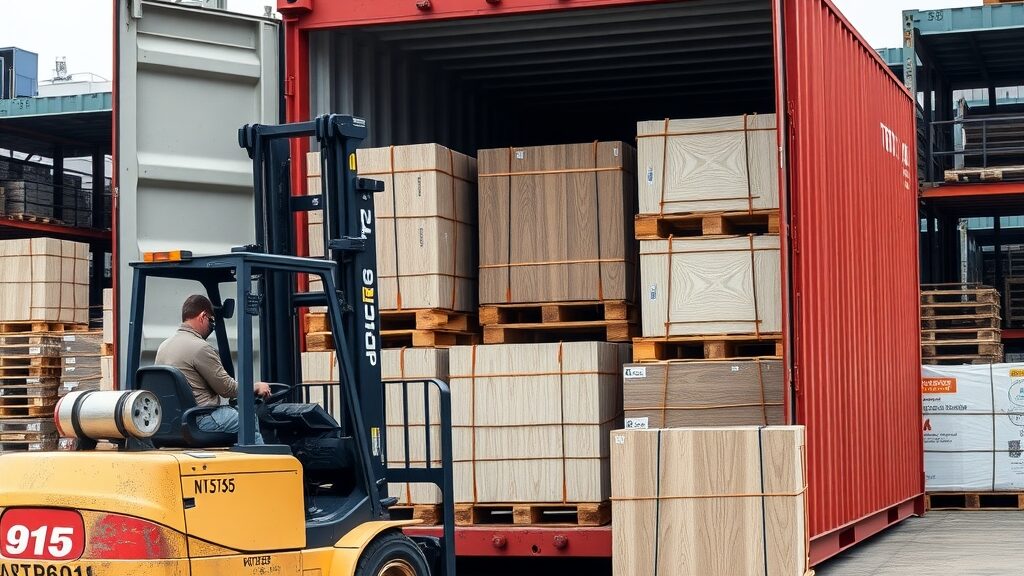
Large-format panels are particularly vulnerable to structural and aesthetic defects due to material shrinkage and ambient humidity fluctuations. Watch out for these specific issues:
- Veneer and Foil Delamination: In acoustic slat or PVC-wrapped boards, inadequate hot-melt adhesive application (PUR glue is superior to water-based EVA) causes surface film to blister or peel along the edges. Require cross-hatch adhesion testing and climate-chamber heat testing to confirm bond integrity.
- Tongue-and-Groove Inconsistencies: If extrusion cooling temperatures or CNC blade alignments drift, the click-lock or tongue-and-groove profiles will bind or leave visible gaps during assembly. Insist on a real-time dry-fit assembly test on the factory floor, requiring inspectors to lay at least 10 square meters on a flat surface to check for flush joints.
- Color Variance (Metamerism): Different plastic masterbatch lots or veneer log cuts yield noticeable shade differences. Require suppliers to blend surface materials under standard illuminant D65 lighting booths and assign specific tolerance thresholds under the Delta E color measurement scale (typically maintaining Delta E below 1.0 to 1.5).
- Inspection Protocol: Deploy an independent third-party inspection agency (e.g., QIMA, AsiaInspection, or V-Trust) to execute a During Production Inspection (DUPRO) at 30% completion and a Final Pre-Shipment Inspection (PSI) following the ISO 2859-1 (AQL) standard.
How Should You Handle Shipping, Logistics, and Import Customs?
Handling wall panel shipping and logistics requires selecting optimal Incoterms, packing panels with heavy corner reinforcement to prevent edge damage, and verifying accurate Harmonized System (HS) codes for customs classification. Ocean freight containers should be structurally packed to maximize both weight and volumetric limits.
Wall panels are inherently prone to transport shock because they combine long lengths with vulnerable edges. Structural shipping requires careful planning:
| Logistics Factor | Recommended Best Practice | Risk Mitigation |
|---|---|---|
| Incoterms | FOB (Free on Board) for experienced buyers using their own forwarder; CIF or DDP for straightforward first-time container orders. | Retains cargo control and avoids inflated destination terminal handling charges. |
| Palletization vs. Floor Loading | Pack panels on heavy-duty wooden fumigated pallets (ISPM 15 compliant) with five-ply outer cartons, plastic wrap, and solid paper corner guards. | Floor loading increases container capacity by 15-20% but dramatically escalates edge damage and manual unloading labor costs. |
| Container Desiccants | Suspend high-absorption calcium chloride desiccant bags throughout the container interior. | Prevents “container rain” and mold formation on wood veneer slats and porous acoustic PET felt during multi-week ocean crossings. |
| Customs Classification | Confirm correct local HS codes with your customs broker (e.g., Chapter 39 for PVC/WPC, Chapter 44 for wood veneer/MDF composites, Chapter 68 for PU stone). | Prevents customs delays, reclassification penalties, and unexpected anti-dumping duties. |
How Do You Build a Long-Term Strategic Supplier Relationship?
Building a successful strategic partnership with a Chinese wall panel supplier relies on direct communication, consistent commercial forecasting, and structured payment terms that reward reliable product quality. Collaborative relationships encourage factories to prioritize your orders over competitors during peak seasonal cycles.
Transition from a transactional buyer to a prioritized commercial client using these practical strategies:
- Maintain Transparent Communication: While formal documentation, purchase orders, and engineering drawings should always be archived over email, real-time tactical troubleshooting moves faster on WeChat. Use WeChat to connect directly with plant managers and technical engineers, quickly addressing packaging checks, packaging revisions, and real-time production updates.
- Transition Payment Structures Progressively: Standard opening orders operate on a 30% telegraphic transfer (T/T) deposit with the remaining 70% due upon presentation of the ocean Bill of Lading (B/L) copy. After proving your payment reliability across multiple quarters, negotiate improved cash-flow terms, such as net-30 days, or reduced down payments.
- Provide Forward Production Visibility: Share non-binding 6-month to 12-month demand forecasts with your supplier. This enables their procurement division to bulk-purchase raw resin, veneers, and packaging materials at lower rates, protecting you from mid-year component price volatility.
- Negotiate Regional Exclusivity: If you invest in custom mold designs or high marketing spend to establish a brand in your home territory, secure written exclusive distribution rights for that specific design or profile across your defined geographical zone. Tie exclusivity directly to minimum annual purchase volume targets.
Key Takeaways
- Focus your sourcing search regionally: choose Zhejiang for acoustic slat panels and PVC, Shandong for WPC and wood composites, and Guangdong for architectural stone and metal profiles.
- Demand accredited laboratory test reports verifying fire behavior (ASTM E84 or EN 13501) and low formaldehyde emissions (E0, CARB Phase 2) before purchasing.
- Always order and physically sign off on duplicate “golden samples” to establish explicit tolerance benchmarks for color, grain, and tongue-and-groove fits.
- Hire third-party inspection firms to audit products on-site using AQL standards before transferring your final balance payment.
- Protect product margins by palletizing panels with heavy corner guards and verifying accurate HS codes with customs brokers to prevent damage and reclassification fees.
Frequently Asked Questions
What is the average cost per square meter for decorative wall panels from China?
Prices vary by composite substrate and finish. Basic PVC sheets and standard WPC fluted interior panels generally cost between $3 and $8 per square meter. Engineered acoustic wood slat panels on PET felt typically range from $12 to $25 per square meter, depending on natural veneer type and fire treatment.
Which Chinese province is best for sourcing acoustic slat wood wall panels?
Zhejiang Province—specifically the industrial clusters around Jiaxing and Haining—is the premier manufacturing region for acoustic slat panels. The region concentrates specialized automated veneer wrapping factories, laser precision slitting machinery, and recycled PET non-woven acoustic felt manufacturing, creating exceptionally short component lead times and competitive pricing.
Can Chinese wall panel manufacturers meet European or US fire-retardant standards?
Yes, qualified manufacturers routinely produce panels formulated with flame-retardant chemical additives to satisfy international fire standards. For compliance, insist on independent third-party laboratory reports from agencies like SGS or Intertek confirming an ASTM E84 Class A rating for the United States or EN 13501-1 Class B-s1, d0 for Europe.
What is the standard payment term when working with Chinese wall panel suppliers?
The standard baseline payment structure for initial orders is a 30% deposit via Telegraphic Transfer (T/T) to initiate raw material purchasing and production, with the remaining 70% balance payable upon submission of the Bill of Lading (B/L) and shipping documents following successful pre-shipment quality inspection.
How do I protect my custom panel designs and IP when manufacturing in China?
Protect your intellectual property by signing a bilingual China-centric Non-Disclosure, Non-Use, Non-Circumvention (NNN) agreement governed by Chinese law before distributing proprietary CAD files. Additionally, split the manufacturing of modular components across separate suppliers, or register your design patents and trademarks directly within China’s intellectual property system.