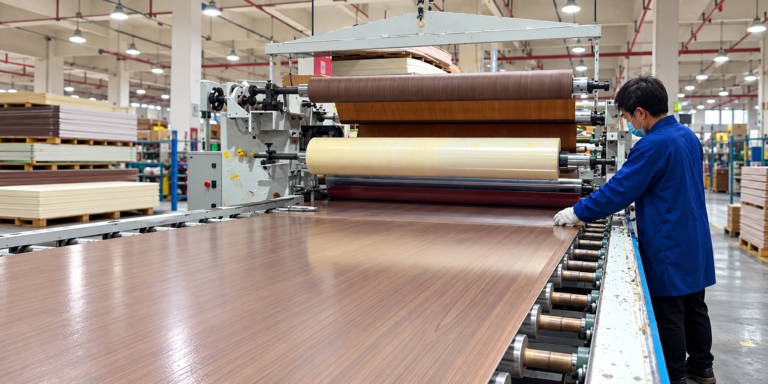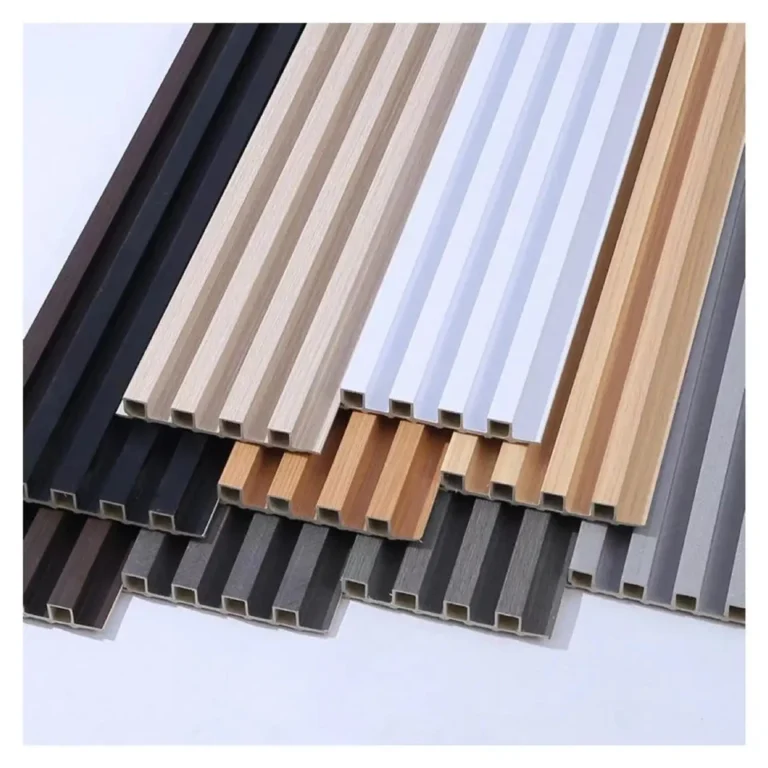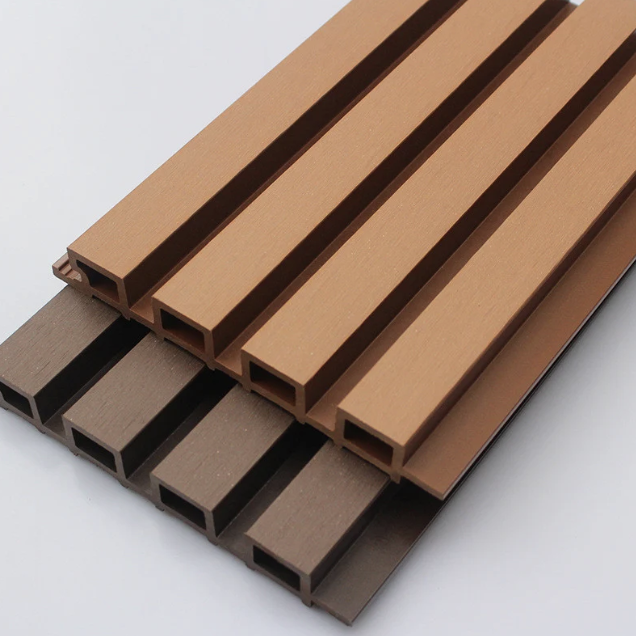
Choosing the right WPC DIY decking manufacturer in China can make a huge difference to the quality, cost, and long-term success of your decking business. With the global demand for low-maintenance, weather-resistant, and eco-friendly outdoor flooring continuing to grow, China has become one of the leading sourcing destinations for wood-plastic composite decking.
From interlocking DIY deck tiles and hollow decking boards to premium co-extruded products, Chinese manufacturers now offer a wide range of solutions for residential, commercial, landscaping, and outdoor construction projects.
But with hundreds of suppliers competing in the market, finding a reliable manufacturer is not always as simple as comparing prices on a supplier website. Product quality, raw materials, manufacturing technology, certifications, customization options, minimum order quantities, export experience, and after-sales support can vary significantly from one factory to another.
A supplier offering the lowest price may not necessarily provide the best overall value, especially when you consider product durability, shipping damage, installation costs, and consistency between batches.
In this guide, we’ll introduce the top 10 WPC DIY decking manufacturers in China and explain what makes each company worth considering. We’ll also look at the key factors you should evaluate before placing an order, including product specifications, quality control, OEM and ODM capabilities, certifications, pricing, and international shipping experience.
Whether you are an importer, distributor, contractor, retailer, or business owner looking for a private-label decking supplier, this list will help you build a more informed shortlist and choose a Chinese WPC manufacturer that fits your specific requirements.
Why WPC DIY Decking Is Growing in Popularity
Wood-plastic composite, commonly abbreviated as WPC, has moved from being a niche alternative to timber into a mainstream outdoor-building material. The basic idea is surprisingly simple: combine wood fiber or wood flour with thermoplastic polymers and selected additives to create a material that retains some of wood’s visual appeal while improving resistance to moisture, insects, rot, and everyday outdoor wear.
WPC DIY decking takes that concept a step further by packaging the material into products that ordinary homeowners, installers, landscapers, and small contractors can assemble with relatively simple tools. Current Chinese industry sources describe DIY WPC tiles as especially suitable for balconies, patios, terraces, gardens, poolside areas, gazebos, and other spaces where quick installation is valuable.
The attraction is not difficult to understand. Traditional timber can look beautiful, but outdoor wood often demands regular cleaning, staining, sealing, painting, or replacement, depending on the species and climate. Ceramic and stone can be durable but may feel colder, require more preparation, and be less forgiving when homeowners want to change a design.
WPC occupies an interesting middle ground: it can imitate the appearance of timber while requiring comparatively little routine maintenance. For a DIY customer, that combination is rather like choosing a modern smartphone instead of a complicated piece of old equipment—the goal is not merely that it works, but that it works without demanding constant attention.
As global buyers increasingly look for low-maintenance outdoor materials, Chinese factories have responded with hollow boards, solid boards, co-extruded products, embossed finishes, interlocking tiles, accessories, and increasingly sophisticated surface treatments.
What Makes WPC DIY Decking Different
The word DIY matters because conventional composite decking and DIY decking are not necessarily the same product. Standard WPC boards generally require a substructure, clips, screws, cutting, spacing, and careful installation. DIY deck tiles, on the other hand, are often designed around an interlocking base or simplified connection mechanism that allows sections to be clicked together over an appropriate surface.
That difference changes the target customer dramatically. A professional deck installer may care most about board dimensions, load-bearing performance, joist spacing, clip systems, and long-term project economics, whereas a homeowner may care more about whether the product can be installed over a balcony without hiring a specialist.
Chinese manufacturers increasingly offer both categories, allowing buyers to select conventional decking boards or modular DIY tile systems depending on the application.
Another important distinction is design flexibility. WPC DIY products can come in wood-grain textures, brushed surfaces, embossed finishes, multiple colors, and different modular dimensions. For example, Shandong LvsenWood currently lists DIY tile products in several formats and says its range offers more than 30 color choices, while its broader manufacturing portfolio covers more than 100 profiles across seven product series.
This matters commercially because decking is no longer simply a structural floor; it has become part of the visual language of a garden, balcony, hotel terrace, rooftop, or outdoor restaurant. Buyers therefore need to assess not only strength and weather resistance but also color consistency, surface appearance, edge finishing, accessory availability, and whether the manufacturer can reproduce a chosen color over repeat orders.
Why China Is a Major WPC Manufacturing Hub
China has become a particularly important sourcing market for WPC products because the country combines established plastics processing, wood-composite technology, extrusion machinery, component manufacturing, logistics infrastructure, and large-scale export networks. Current industry directories list hundreds of Chinese WPC composite decking suppliers, illustrating just how broad the supplier base has become.
That does not mean every factory is equally suitable for international buyers. Quite the opposite: a large supplier pool creates a quality-control problem because buyers must separate genuine manufacturers from trading companies, factories focused on low-cost commodity products, and suppliers whose online marketing may be stronger than their technical capabilities.
The strongest manufacturers tend to differentiate themselves through some combination of production scale, testing, certifications, product development, export experience, customization, and after-sales support. For instance, Shanghai Seven Trust states that it operates an 18,000-square-meter manufacturing facility with more than 200 employees and exports WPC products to more than 100 countries and areas.
COOWIN similarly describes itself as having more than two decades of experience in the WPC industry, with product development covering multiple composite decking technologies. Meanwhile, newer 2026 industry coverage highlights manufacturers such as Terratsa, Anhui Sentai, Zhejiang Yongyu, Linyi Supereco, and Dongguan Bettowood as suppliers worth examining for international sourcing.
How to Choose a WPC DIY Decking Manufacturer
Choosing a manufacturer should begin with the product specification, not the factory’s marketing language. A buyer should define the intended application, climate, installation method, expected foot traffic, required dimensions, preferred color, surface texture, fire-performance requirements where applicable, and target market before requesting quotations.
For example, a DIY tile intended for a residential balcony has a different commercial proposition from a heavy-duty board destined for a hotel pool deck. The manufacturer should be able to explain the composition of the product, dimensions and tolerances, density, water absorption, mechanical performance, UV stabilization, surface treatment, packaging, and recommended installation method. If the supplier cannot provide clear technical documentation, a low factory price is unlikely to compensate for the uncertainty that follows.
Testing should also be treated as part of sourcing rather than an optional extra. A professional buyer should request current test reports and verify which product they actually cover. Certifications such as CE, FSC, ISO systems, SGS testing, EPD documentation, or local regulatory compliance can be useful, but certification names alone do not prove that every product from a factory meets every requirement.
A manufacturer may have one certified product while offering dozens of other profiles with different formulations. This is why samples are so important. Ideally, buyers should compare several samples from different factories, inspect the underside and connection system, check dimensions, evaluate surface consistency, perform basic water and scratch observations, and then request independent laboratory testing when the order value or regulatory risk justifies the expense.
Product Quality and Manufacturing Standards
Quality in WPC decking is a combination of material formulation, extrusion control, surface treatment, structural design, and quality inspection. A product can look excellent when it leaves a showroom but perform poorly after months of heat, moisture, UV exposure, or repeated thermal expansion and contraction.
Buyers should therefore ask manufacturers how they control raw materials and whether production batches are tested. Seven Trust, for example, states that it performs raw-material inspection, production inspection, and pre-shipment testing as part of its manufacturing process. COOWIN likewise says its quality-assurance process covers materials through finished-product shipment and that every batch is controlled.
For DIY tile products, the connection mechanism deserves special attention because it is often the weakest point in an otherwise good product. A board can be structurally strong, yet a poorly designed plastic base may become brittle or deform under temperature changes. Buyers should examine how tiles connect, whether replacement tiles are available, whether the system can accommodate uneven surfaces, how edges are finished, and whether drainage remains adequate underneath the modular panels.
Installation instructions should be tested by someone who was not involved in designing the product; if an ordinary user cannot understand the system without a long explanation from the factory, the product may not be genuinely DIY-friendly. In other words, easy installation should be demonstrated, not merely advertised.
OEM, ODM, MOQ, and Export Capabilities
International buyers should also investigate whether the manufacturer is prepared to support the commercial model they have in mind. OEM may involve producing an existing product under the buyer’s brand, while ODM generally allows more involvement in product design and development.
These services can be particularly valuable for distributors, home-improvement retailers, landscaping companies, and e-commerce brands that want a differentiated product instead of another generic brown decking tile. Minimum order quantities are equally important. A factory may advertise customization but require a production volume far above what a small distributor can realistically sell.
Export experience is another useful filter. A manufacturer accustomed to international shipments should understand export packaging, container loading, documentation, product labeling, customs requirements, and the practical problems associated with long-distance transportation. Current Chinese WPC manufacturers advertise exports ranging from dozens to more than 100 countries, while individual suppliers cite extensive international market experience.
The buyer should still verify these claims rather than assuming that a polished website equals export competence. Ask for references, sample export documents where appropriate, packaging photographs, carton specifications, pallet dimensions, and container-loading calculations. These details may sound mundane, but they often determine whether an attractive factory quotation remains attractive after freight, breakage, storage, and handling costs are added.
Top 10 WPC DIY Decking Manufacturers in China
The following list focuses on manufacturers identified in current industry coverage specifically associated with WPC DIY decking, while also considering product range, manufacturing capabilities, technical positioning, and relevance to international buyers.
It should be viewed as a sourcing shortlist rather than an official industry ranking because there is no universally recognized independent ranking that objectively determines China’s ten best WPC DIY decking factories. The 2026 supplier landscape is broad, and different buyers will rank manufacturers differently depending on price, product specification, certifications, location, MOQ, and target market.
1. Xiamen Vocana Building Material Co., Ltd.
Xiamen Vocana Building Material Co., Ltd. is identified in current industry coverage as a WPC DIY decking manufacturer with a focus on research and development, manufacturing technology, quality control, and international customers. Its position in the Fujian manufacturing ecosystem can also be useful for buyers interested in sourcing from southeastern China, where building-material and export-oriented supply chains are well developed.
The company’s profile is particularly relevant to buyers who want a supplier capable of supporting product development rather than simply selling a standard catalog item. Current industry information describes Vocana as emphasizing advanced production technology and quality checks from raw-material selection through finished-product inspection.
For a buyer, the key question is how much customization Vocana can provide for a specific project or private-label program. Requesting samples of the exact DIY decking system, rather than generic WPC boards, is essential because the connection system, surface finish, dimensions, and packaging determine the real value of the product.
Buyers should also request information on color matching, tooling costs, MOQ, lead times, replacement accessories, and container loading. Vocana may be particularly worth comparing when the purchasing strategy prioritizes R&D capability and international-market support rather than choosing a supplier solely on the lowest unit quotation.
2. Shanghai Jialong Wood-Plastic Co., Ltd.
Shanghai Jialong Wood-Plastic Co., Ltd. appears in current Chinese industry coverage as a WPC DIY decking manufacturer based in Shanghai. Its location provides access to one of China’s major commercial, industrial, logistics, and export centers.
The manufacturer is described as focusing on stable WPC performance, environmentally oriented production, moisture resistance, and anti-slip surface characteristics. These are practical attributes for DIY decking because the product is often installed in balconies, patios, gardens, and other areas exposed to rain or humidity.
For importers, Jialong should be assessed around consistency rather than marketing claims alone. Ask for a complete product data sheet and compare density, dimensions, connection design, color options, water absorption, surface treatment, and packaging against competing factories.
Shanghai-based production can also be attractive when logistics or supplier visits are important, although the final shipping economics will depend on the production site and destination port. The best use of a supplier like Jialong is therefore not to assume it is automatically the cheapest or highest quality, but to include it in a structured RFQ process and let technical samples, commercial terms, and testing results determine its position.
3. Nantong New Times Composite Material Co., Ltd.
Nantong New Times Composite Material Co., Ltd. is another manufacturer identified in the current top-10 DIY decking industry coverage. The company is described as focusing on research, development, production, and sales, with an emphasis on product innovation.
Its WPC decking is presented as having a high-strength structure, UV resistance, and low-maintenance characteristics. These features are commercially relevant because outdoor decking must cope with much more than foot traffic; repeated sunlight and temperature changes can gradually influence color and dimensional stability.
Nantong’s location in Jiangsu also places it within a major manufacturing region with extensive industrial infrastructure. Buyers considering this supplier should ask specifically about extrusion technology, material formulation, UV stabilizers, available tile or board systems, and whether the same formulation is maintained across production batches.
4. Guangdong Runfeng Wood-Plastic Technology Co., Ltd.
Guangdong Runfeng Wood-Plastic Technology Co., Ltd. is described as a professional WPC manufacturer in Guangdong with a technical and R&D-oriented production system. Current industry coverage highlights recycled wood fibers and plastics, product variety, supporting accessories, and after-sales assistance among its characteristics.
Guangdong is one of China’s most important manufacturing regions, so a buyer sourcing from this area may benefit from mature industrial supply chains and convenient access to related plastics, hardware, packaging, and export services.
5. Shandong Huaxin Wood-Plastic Co., Ltd.
Shandong Huaxin Wood-Plastic Co., Ltd. is listed among the current top manufacturers associated with WPC DIY decking. The company is described as benefiting from Shandong’s raw-material and manufacturing environment and emphasizes characteristics such as wear resistance, colorfastness, ease of cleaning, and large-scale production.
Those features make the manufacturer potentially interesting for commercial environments as well as residential DIY applications, particularly where the decking is expected to experience repeated foot traffic.
When comparing Huaxin with other Shandong suppliers, buyers should pay attention to manufacturing scale and actual production consistency rather than simply the headline production capacity. A large factory can be an advantage for repeat orders, but only if the factory has strong process controls.
Requesting batch samples and checking color differences between production runs can reveal more than a brochure. Buyers should also evaluate how the manufacturer handles complaints, replacement components, damaged shipments, and warranty claims. In international procurement, after-sales reliability is part of product quality because a supplier who disappears after receiving payment can turn a small defect into a large commercial problem.
6. Jiangsu Senrong Wood-Plastic Co., Ltd.
Jiangsu Senrong Wood-Plastic Co., Ltd. is described as a professional WPC DIY decking manufacturer with a focus on product innovation and production efficiency. Current industry coverage highlights flexible design, chemical resistance, and the availability of products with fire-retardant characteristics, depending on the specific product.
The design flexibility can be especially useful for DIY decking because homeowners and landscape designers increasingly want modular patterns instead of a single repetitive layout.
Potential buyers should be careful with performance terminology such as “fire retardant,” “UV resistant,” or “waterproof.” These terms should always be connected to a specific tested product and standard rather than treated as general characteristics of an entire product range. Senrong can therefore be included in a sourcing comparison where the buyer requests exact test reports, material composition, installation details, and current export specifications.
For customized projects, it may also be worthwhile to ask whether the company can modify profiles, textures, colors, or connection components. Such capabilities can make a manufacturer significantly more valuable to a distributor than a factory selling only standardized SKUs.
7. Zhejiang Jufeng Wood-Plastic Co., Ltd.
Zhejiang Jufeng Wood-Plastic Co., Ltd. is identified as another Chinese manufacturer serving the WPC DIY decking market. The company is described as emphasizing precision manufacturing, product aesthetics, quality assurance, and technological development.
Zhejiang is one of China’s strongest manufacturing provinces, with extensive experience across plastics, household products, construction materials, and export-oriented manufacturing. That industrial environment can be advantageous when a WPC company needs access to specialized machinery, components, packaging suppliers, or engineering services.
For buyers, Jufeng deserves attention when surface quality and dimensional consistency are high priorities. DIY decking is visually unforgiving: two tiles that differ slightly in height or color can create a noticeably uneven installation. A good purchasing process should therefore include dimensional tolerance requirements and acceptable color variation limits in the purchase agreement.
If the product will be sold through a retail or e-commerce channel, buyers should also test how well the packaging protects corners, connectors, and visible surfaces during international transportation.
8. Hebei Hongda Wood-Plastic Co., Ltd.
Hebei Hongda Wood-Plastic Co., Ltd. is presented in current industry coverage as a cost-conscious WPC DIY decking manufacturer emphasizing weather resistance, simple maintenance, sustainable production, and efficient manufacturing.
This positioning can make the company interesting to importers serving price-sensitive markets, particularly where consumers want the appearance and convenience of composite decking without paying for premium co-extruded products.
However, price should never be evaluated independently of service life and installation cost. A lower-priced tile that fades rapidly, breaks during transport, or has a poorly engineered connector can be more expensive than a higher-quality product over the life of a project.
Buyers should therefore compare Hongda on a total-cost-per-square-meter basis. This should include decking, accessories, packaging, freight, expected wastage, installation labor, and replacement rates. If the product passes technical testing and the commercial terms remain competitive, a cost-oriented manufacturer can be a valuable source for high-volume projects and private-label programs.
9. Fujian Xinyuan Wood-Plastic Co., Ltd.
Fujian Xinyuan Wood-Plastic Co., Ltd. is described as an established WPC manufacturer with broad product offerings, substantial production capability, and experience serving customer requirements. Current coverage emphasizes color options, structural integrity, long service life, and production capacity.
A broad color range can be commercially useful for distributors because different markets may favor different visual styles: warm teak tones can work well in resort applications, while grey and charcoal products are often preferred for modern residential architecture.
Xinyuan may be especially relevant to buyers who expect repeat orders and need a factory capable of maintaining supply as sales increase. Nevertheless, production capacity should be verified through actual lead-time commitments and production schedules rather than accepted solely because a supplier describes itself as large.
Ask about peak-season capacity, tooling availability, normal production lead time, container loading, and how quickly the factory can reproduce an existing SKU. A reliable long-term supplier is one that can deliver the same product six months later, not simply one that can produce an impressive first sample.
10. Tianjin Huayuan Wood-Plastic Co., Ltd.
Tianjin Huayuan Wood-Plastic Co., Ltd. completes this particular top-ten shortlist. Current industry coverage describes the company as a WPC DIY decking manufacturer focused on technological development, quality-driven production, surface treatment, anti-aging characteristics, and connection systems.
The emphasis on connection technology is particularly relevant to DIY products because installation convenience and long-term stability depend heavily on how individual components interact.
For buyers in northern China, Tianjin can also be strategically interesting because of its major industrial and logistics infrastructure. International customers should still compare the manufacturer’s actual factory location, port options, production schedule, and inland transportation costs before making assumptions about logistics.
The most important evaluation points remain the same: obtain samples, confirm specifications, verify test documentation, check packaging, negotiate clear tolerances, and establish what happens if goods arrive damaged or fail agreed specifications. A strong supplier relationship is built on measurable requirements rather than vague promises about quality.
Other Chinese Manufacturers Worth Comparing
The ten companies above are not the only Chinese WPC manufacturers worth considering. Shanghai Seven Trust, for example, is particularly notable because it explicitly lists WPC DIY decking alongside hollow, solid, co-extruded, and other decking products. Its company information says it exports to more than 100 countries and operates an 18,000-square-meter factory with more than 200 employees.
COOWIN is another significant name for buyers looking beyond modular DIY tiles toward broader composite decking systems; the company says it has been involved in the WPC industry for more than 20 years and offers several decking technologies, including 3D wood-grain and capped composite products.
Linyi Supereco Building & Decoration Materials Co., Ltd. is another manufacturer worth putting on an RFQ list, particularly for buyers who care about certifications and factory verification. Its current website identifies FSC, CE, SGS, Intertek, and third-party audit credentials and specifically promotes WPC decking and DIY decking products.
Shandong LvsenWood is especially relevant for buyers specifically searching for interlocking WPC DIY tiles: its current product information describes 300 × 300 mm and other tile formats, up to 30 colors, waterproof classification, and an annual production capacity exceeding 50,000 tons. Meanwhile, 2026 industry coverage identifies Terratsa New Material, Anhui Sentai WPC Group, Zhejiang Yongyu Home Furnishings, Linyi Supereco, and Dongguan Bettowood among Chinese WPC manufacturers serving international buyers.
How to Compare WPC DIY Decking Before Importing
| Factor | What to Check | Why It Matters |
|---|---|---|
| Material | Wood fiber, HDPE/PP/PVC, additives | Influences strength, moisture resistance, appearance and stability |
| Product type | Interlocking tile, hollow board, solid board, co-extruded board | Determines installation method and target application |
| Dimensions | Tile/board size and tolerances | Prevents installation problems and inconsistent appearance |
| Surface | Embossed, brushed, wood grain, capped | Affects aesthetics, slip characteristics and durability |
| Color | Available colors and batch consistency | Important for retail sales and repeat orders |
| Water resistance | Water absorption and drainage design | Critical for balconies, patios and wet climates |
| UV performance | UV stabilizers and test data | Helps protect color and long-term outdoor performance |
| Connection system | Clips, screws, interlocking base or accessories | Determines installation speed and stability |
| Certifications | CE, FSC, ISO, SGS, EPD or market-specific standards | Helps demonstrate compliance and environmental credentials |
| MOQ | Minimum order for standard and customized products | Directly affects inventory investment |
| Packaging | Cartons, pallets, protective film and loading method | Reduces transportation damage |
| OEM/ODM | Branding, colors, tooling and packaging | Important for distributors and private-label businesses |
| Lead time | Sample and mass-production schedules | Helps prevent project delays |
| Warranty | Coverage and exclusions | Protects the buyer after installation |
| Factory verification | Audit, video inspection or physical visit | Helps confirm manufacturing capability |
A practical sourcing process should begin with perhaps three to five manufacturers, not twenty factories simultaneously. Send all of them exactly the same specification sheet and request comparable quotations. This makes it easier to distinguish a genuinely competitive supplier from one that simply gives an attractive headline price while quietly excluding accessories, packaging, testing, or other necessary items.
One of the biggest mistakes buyers make is comparing factory price instead of landed price. Imagine two suppliers: Factory A quotes $X per square meter, while Factory B quotes $X plus a modest premium. Factory A may initially look like the obvious winner. But then suppose its product requires additional edge components, has heavier packaging, produces more damaged tiles during shipping, or has a higher installation wastage rate.

Conclusion
The Chinese WPC DIY decking market offers a remarkably broad selection for importers, distributors, contractors, retailers, and private-label brands.
The ten manufacturers discussed here—Xiamen Vocana, Shanghai Jialong, Nantong New Times, Guangdong Runfeng, Shandong Huaxin, Jiangsu Senrong, Zhejiang Jufeng, Hebei Hongda, Fujian Xinyuan, and Tianjin Huayuan—represent a useful starting point for supplier research based on current industry coverage. Other manufacturers, including Seven Trust, COOWIN, LvsenWood, Linyi Supereco, and several emerging 2026 suppliers, should also be considered depending on the required product and market.
The smartest approach is to treat supplier selection like building the deck itself: start with a solid foundation. Define your specification, shortlist credible manufacturers, request identical samples, verify test reports, calculate landed costs, negotiate clear quality standards, and conduct a factory audit before placing a significant order.
China’s WPC industry offers substantial manufacturing depth, but the best result comes from matching the right factory to the right product—not simply choosing the supplier with the lowest price.
FAQs About WPC DIY decking
1. What is WPC DIY decking?
WPC DIY decking is outdoor flooring made from wood-plastic composite that is designed to be relatively easy for homeowners or installers to assemble. Unlike conventional timber, WPC combines wood fibers or wood flour with thermoplastic materials and additives to create a product designed for improved moisture resistance, durability, and reduced maintenance.
DIY versions commonly use interlocking tiles or simplified connection systems, allowing installation with fewer specialized tools. Current product information from Chinese manufacturers shows DIY WPC tiles being offered for balconies, patios, gardens, terraces, poolside spaces, gazebos, and temporary installations.
2. Why buy WPC DIY decking from China?
China offers a large manufacturing ecosystem for WPC products, including extrusion technology, raw-material supply, accessory production, packaging, and export logistics.
The country’s supplier market is also extremely broad, giving buyers access to budget products, premium co-extruded decking, modular tiles, customized profiles, and private-label solutions. Some established manufacturers report exporting to dozens or even more than 100 countries. However, buyers should conduct proper factory verification and product testing because supplier quality varies considerably.
3. What should I ask a WPC decking manufacturer before ordering?
Ask for a technical data sheet, material composition, dimensions, tolerances, density, water-absorption data, UV-performance information, test reports, certifications, MOQ, sample policy, production lead time, packaging specifications, warranty terms, and export experience.
If the product is customized, also ask about tooling costs, color matching, packaging design, and minimum quantities for each customized component. Request samples from the exact production line and SKU you intend to purchase. This prevents a common sourcing mistake in which a buyer approves an attractive sample but receives a commercially different product.
4. Is WPC decking better than natural wood?
Neither material is universally better; they solve different problems. Natural wood can provide authentic grain, a traditional appearance, and strong aesthetic appeal, but many outdoor timber products require regular maintenance and are vulnerable to moisture, insects, rot, or weathering.
WPC is generally selected when buyers prioritize low maintenance, moisture resistance, consistent appearance, and long-term convenience. The best choice depends on climate, budget, appearance preferences, installation requirements, and the quality of the particular WPC product being considered.
5. How can I find the best WPC DIY decking manufacturer in China?
Start by identifying three to five manufacturers whose product type matches your exact application. Send each one the same specification sheet, obtain comparable samples and quotations, verify certifications and test reports, calculate landed cost, and conduct a factory audit before committing to a large order.
Manufacturers such as Seven Trust, COOWIN, LvsenWood, Linyi Supereco, and the ten suppliers covered above can provide additional benchmarks when building a sourcing shortlist. The best manufacturer is the one that consistently meets your technical, commercial, regulatory, and delivery requirements, rather than simply the one offering the lowest initial price.