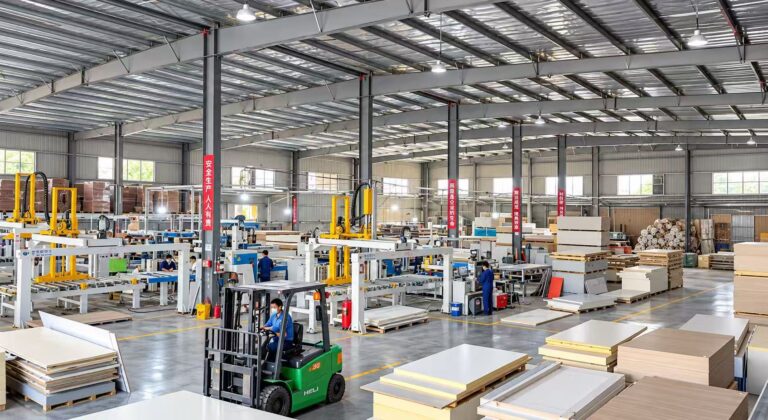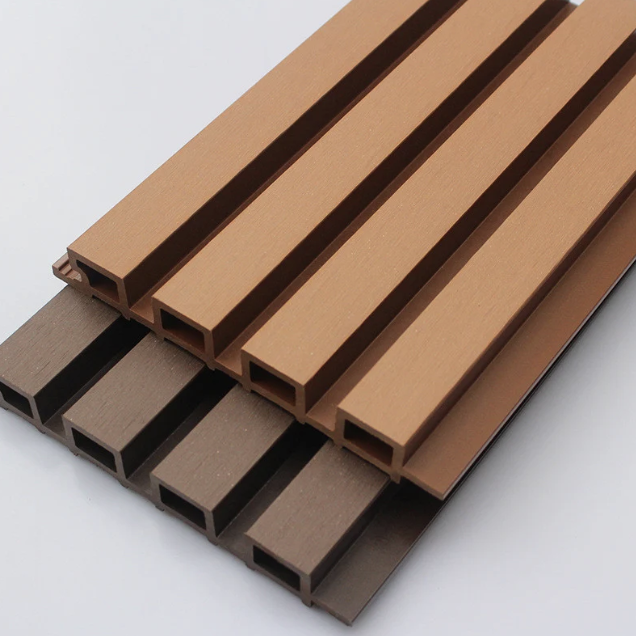
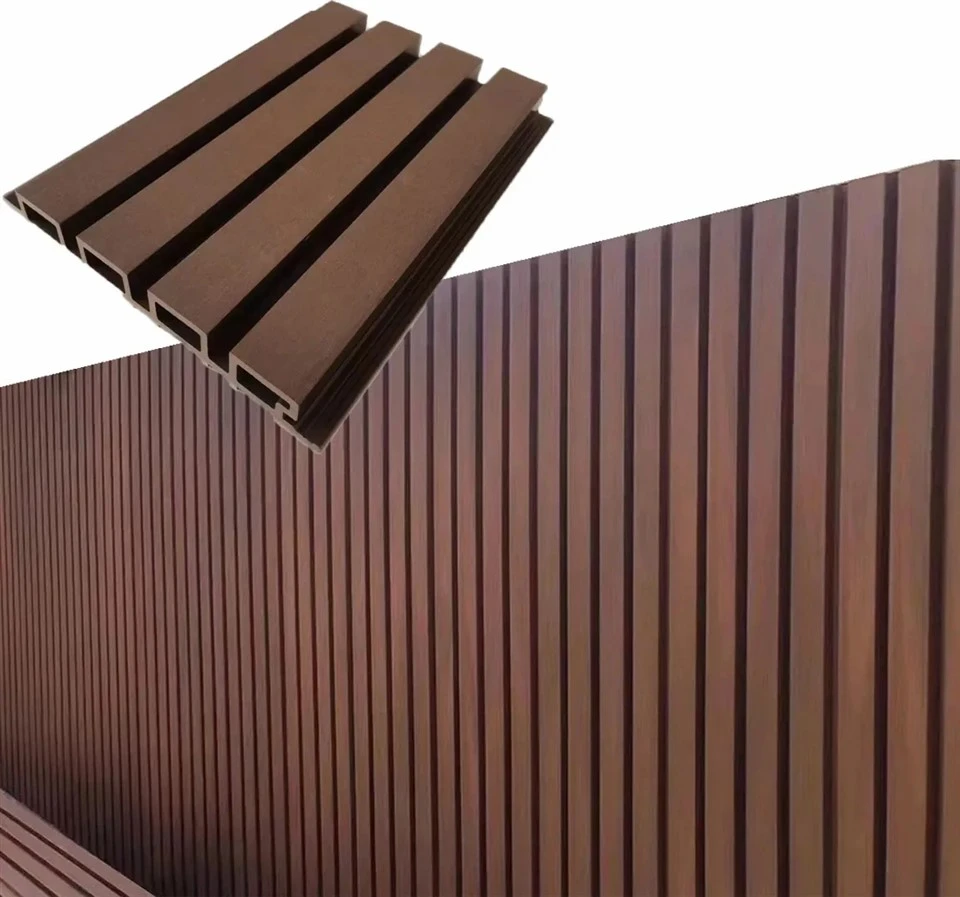
Finding the right PVC wall panel manufacturer in China can be the key to getting high-quality products at competitive prices while building a reliable long-term supply chain. PVC wall panels have become increasingly popular in residential, commercial, hospitality, and interior renovation projects because they are lightweight, water-resistant, easy to clean, and available in a wide variety of colors, textures, and decorative finishes.
With China being one of the world’s largest manufacturing centers for building and interior decoration materials, buyers can find everything from basic PVC panels to premium waterproof, marble-effect, wood-effect, fluted, and customized wall panel solutions.
However, choosing a suitable supplier can be challenging. A quick search may reveal hundreds of Chinese manufacturers and trading companies, but not all suppliers offer the same level of product quality, manufacturing capacity, customization, certifications, pricing, and export experience.
The cheapest quotation may look attractive at first, but factors such as raw-material quality, panel thickness, surface durability, dimensional stability, packaging, production consistency, and after-sales service can have a major impact on your actual costs and customer satisfaction.
In this guide, we’ll introduce the top 10 PVC wall panel manufacturers in China and highlight what makes each company worth considering. We’ll also explain the most important factors to evaluate before choosing a supplier, including manufacturing capabilities, product specifications, OEM and ODM services, certifications, minimum order quantities, quality control, and international shipping experience.
Whether you are an importer, distributor, contractor, interior designer, retailer, or business owner looking for a private-label supplier, this guide will help you narrow down your options and find a reliable PVC wall panel manufacturer in China for your next project.
Top 10 PVC Wall Panel Manufacturers in China
Finding the right PVC wall panel manufacturer in China can make a major difference to the quality, cost, and long-term success of your building-material business. PVC wall panels have become increasingly popular in residential, commercial, hospitality, retail, and renovation projects because they combine practical performance with attractive decorative finishes.
Depending on the manufacturer and product specification, buyers can find everything from traditional hollow PVC panels and PVC ceiling systems to large-format marble-effect sheets, UV-coated decorative boards, waterproof bathroom panels, wood-grain finishes, fluted designs, and customized private-label products.
China has developed a particularly broad manufacturing ecosystem for these products, giving international buyers access to competitive pricing and a wide range of designs.
But finding a factory is easy; finding the right factory is much harder. Search results can produce hundreds of suppliers, yet they can differ significantly in raw-material formulation, production equipment, quality-control procedures, product consistency, certifications, minimum order quantities, customization capabilities, packaging, and export experience.
A supplier offering the lowest price may look attractive on paper, but if its panels arrive damaged, vary in thickness, fade quickly, or fail to meet the specifications promised during sampling, the initial saving can disappear very quickly.
In this guide, we examine 10 Chinese PVC wall panel manufacturers and suppliers worth considering in 2026. This is a sourcing shortlist rather than an official industry ranking, because there is no universally accepted independent ranking of China’s PVC wall panel factories.
The companies selected represent different strengths, including PVC marble sheets, UV wall panels, decorative PVC panels, WPC/PVC hybrid products, OEM/ODM manufacturing, export experience, and large-scale production. We will also look at what you should check before placing an order so you can compare suppliers based on total value rather than simply choosing the cheapest quotation.
Why PVC Wall Panels Are Becoming Popular
PVC wall panels have carved out an interesting position in the interior-decoration market. They sit somewhere between traditional wall finishes and modern prefabricated decorative systems, offering buyers a way to change the appearance of an interior without the labor-intensive process associated with some conventional materials.
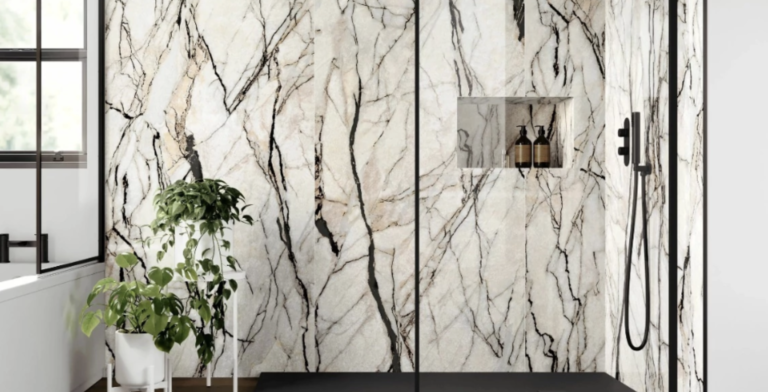
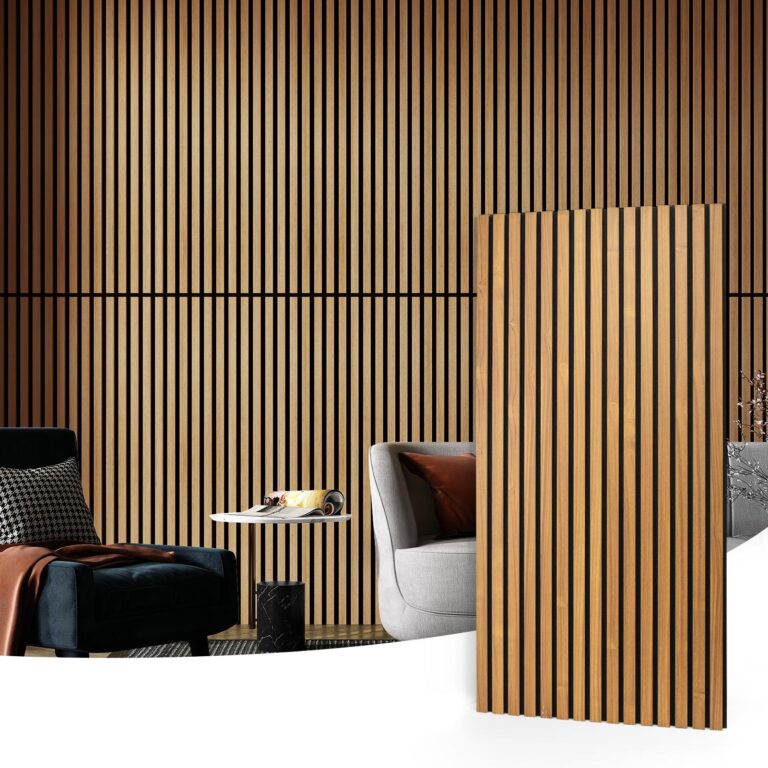
Manufacturers now produce PVC panels with marble patterns, wood textures, metallic effects, high-gloss finishes, matte surfaces, fluted profiles, embossed textures, and digitally printed designs. This variety has helped PVC panels move beyond their traditional association with basic utility interiors and into homes, hotels, restaurants, offices, retail stores, bathrooms, kitchens, and feature-wall applications.
The appeal becomes particularly obvious when renovation speed matters. Traditional tile installation can involve substrate preparation, adhesive, cutting, grouting, drying time, and substantial labor. A decorative PVC wall panel can potentially simplify several of those steps, depending on the installation system and substrate. Panels are generally lightweight compared with many mineral-based alternatives, which can make handling and transportation easier.
Their resistance to moisture also makes certain PVC products attractive for bathrooms, kitchens, utility rooms, and other humid environments. Current industry coverage continues to highlight waterproof, low-maintenance, and easy-installation characteristics as major reasons international buyers are sourcing PVC and related decorative wall panels from China.
What Makes PVC Wall Panels Different
The phrase PVC wall panel actually covers a surprisingly broad category of products. A conventional PVC panel may have a relatively simple structure, while a PVC marble sheet can combine a PVC and mineral-filled core with a decorative film or printed surface and UV coating. Some products are laminated, some are hot-stamped, and others use specialized surface treatments designed to improve scratch resistance, gloss retention, or visual realism.
There are also WPC panels, bamboo-charcoal panels, PS panels, SPC wall panels, and other decorative products that are frequently marketed alongside PVC panels. A buyer therefore needs to identify the exact construction before comparing quotations.
That distinction is important because two panels that look almost identical in a supplier’s online photograph can have very different performance characteristics. One may be designed primarily for decorative feature walls, while another may be marketed for wet areas. One may have a thicker wear or protective layer, while another uses a thinner decorative surface.
One factory may use a particular PVC resin and filler formulation, while another may reduce material costs through a different composition. This is why professional sourcing should focus on the complete product specification, not simply the product photograph and price per sheet.
Why China Is a Major PVC Wall Panel Manufacturing Hub
China has developed an extensive supply chain around interior decoration materials, including plastics processing, extrusion, printing, laminating, UV coating, packaging, machinery, hardware, and international logistics. Current industry sources continue to describe China as a major sourcing hub for PVC and related decorative panels, with manufacturers serving markets in Europe, North America, Southeast Asia, the Middle East, Africa, and South America.
One of China’s strongest advantages is product variety. A buyer can often source several related product categories from the same manufacturing region or even the same factory. For example, current supplier portfolios include PVC marble sheets, WPC wall panels, PS panels, UV boards, acoustic panels, PVC ceilings, outdoor wall cladding, and decorative accessories.
Shandong Laimeng says its Linyi factory operates more than 40 production lines and supplies PVC marble sheets, WPC wall panels, PS wall panels, and related accessories, while Haining Yike lists PVC marble sheets, WPC wall panels, PVC ceiling panels, PS panels, and other decorative products.
How to Choose a PVC Wall Panel Manufacturer in China
Choosing a manufacturer should begin with a clear product specification. Before contacting factories, decide whether you need conventional PVC panels, PVC marble sheets, UV-coated boards, waterproof bathroom panels, fluted panels, wood-grain panels, or another specialized format.
Define the required thickness, width, length, surface finish, color, core construction, application, packaging method, and target market. If you sell into a market with specific fire, VOC, chemical, or building-product requirements, those requirements should be communicated before sampling rather than after production.
You should also determine whether you need standard products or OEM/ODM products. Standard products are generally easier to source and may have lower minimum order quantities. Customized products can give your brand a competitive advantage but may require new tooling, printing cylinders, molds, customized colors, special packaging, or higher minimum quantities. A good factory should be able to explain these costs clearly rather than simply saying that “everything can be customized.”
Quality, Materials, and Production Technology
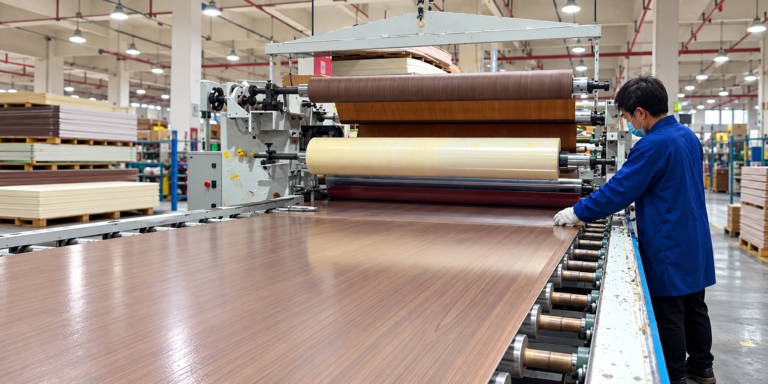
The quality of PVC wall panels begins with the formulation and continues throughout extrusion, forming, printing, lamination, coating, cutting, inspection, and packaging. A manufacturer should be able to provide a product specification sheet explaining important characteristics such as thickness, dimensions, weight per square meter, surface construction, recommended installation method, and applicable performance tests.
If the product is marketed as waterproof, fire-resistant, antimicrobial, scratch-resistant, or environmentally friendly, ask for supporting test reports rather than relying on marketing terminology.
Current Chinese suppliers demonstrate very different production profiles. Qingdao Limo, for example, says its facility has more than 40 production lines and manufactures PVC marble sheets, WPC wall panels, WPC foam boards, and PU stone panels, while Shandong AOWEI says it operates more than 100 production lines and has expanded its product range from WPC wall panels and PVC marble sheets into SPC flooring, PU stone, PS panels, and other decorative products.
A large number of production lines can be useful, but production capacity alone does not guarantee quality. What matters is whether the factory has effective process controls and can reproduce the same specification from one batch to another.
A buyer should therefore ask about incoming raw-material inspection, thickness tolerances, surface inspection, color matching, adhesion testing, UV-coating inspection, packaging checks, and final pre-shipment inspection. A beautiful sample is only the beginning; batch-to-batch consistency is what protects your business.
OEM, ODM, MOQ, and Export Capabilities
For distributors and private-label brands, OEM and ODM capabilities can be just as important as product quality. OEM may allow you to put your own brand on an existing product, while ODM can involve developing a product around your design, specification, surface pattern, color, or packaging requirements. Linyi Perfect New Material, for example, says it provides OEM and ODM services and supports customization from design through production.
Minimum order quantity should also be discussed early. A factory may be happy to customize a product but require a substantial production volume to justify a new printing pattern or tooling investment. Ask whether MOQ applies per design, per color, per thickness, or per container. Also ask about sample fees and whether they are refundable after a bulk order. These details can significantly affect the economics of a new product launch.
Export experience is another useful indicator. A manufacturer accustomed to international buyers should understand export packaging, container loading, documentation, labeling, lead times, and the practical problems that can occur during long-distance transportation.
However, don’t confuse “exports worldwide” with proof of suitability for your particular market. A supplier experienced in the Middle East may not automatically understand European fire or VOC requirements, for example. The right factory is one that can demonstrate experience with your destination market and your product category.
Top 10 PVC Wall Panel Manufacturers in China
The following companies are presented as a practical sourcing shortlist based on current company information and 2026 industry coverage. They are not ranked according to an independent certification or official industry league table. Product ranges and capabilities can change, so buyers should verify current specifications directly with each manufacturer before making a purchasing decision.
1. Haining Pansen Import and Export Co., Ltd.
Haining Pansen Import and Export Co., Ltd. is a China-based manufacturer and exporter specializing in PVC panels, PVC ceilings, PVC wall panels, and decorative ceiling systems. Current industry coverage identifies Pansen as one of the manufacturers serving the international PVC panel market and describes its products as lightweight, moisture-resistant, and available in a variety of decorative textures, including wood grain, marble, and 3D designs.
The company is particularly relevant for buyers looking for a broader decorative-panel portfolio rather than a single PVC wall-board SKU. A diversified range can be useful for wholesalers because it allows multiple complementary products to be sourced from the same supplier.
When evaluating Pansen, buyers should request samples of the exact panel construction they plan to sell and compare the thickness, surface layer, weight, dimensions, and packaging against competing suppliers. For private-label buyers, it is also worth discussing customized surface designs and packaging before selecting the final product.
2. Haining Yike New Material Co., Ltd.
Haining Yike New Material Co., Ltd. is one of the more interesting manufacturers for buyers seeking a broad portfolio of decorative building materials. Its current company information lists PVC marble sheets, WPC wall panels for indoor and outdoor applications, PVC ceiling panels, bamboo-charcoal wood veneer, WPC decking, PVC flooring, PS wall panels, and PU stone panels.
Recent 2026 industry coverage specifically highlights Yike for its export scale, broad product mix, and reported annual output of approximately 5 million square meters. That makes it a supplier worth considering when production capacity and product diversification are important.
Buyers should still evaluate the exact PVC panel they intend to import because manufacturing capacity across a broad portfolio does not mean every product has identical technical characteristics. Ask for current production specifications, available finishes, testing documentation, sample lead times, and container-loading details before moving toward a bulk order.
3. Shandong Laimeng New Materials Co., Ltd.
Shandong Laimeng New Materials Co., Ltd. is based in Linyi, Shandong, a major manufacturing center for building and decorative materials. The company says it has around 12 years of export experience and operates a factory with more than 40 production lines. Its product portfolio includes PVC marble sheets, WPC wall panels, PS wall panels, PU stone panels, acoustic products, and related decorative materials.
Laimeng is particularly interesting for buyers who want to consolidate several decorative products under one supplier. Its company information also describes customization capabilities, including the development of decorative textures and patterns. For an importer, this can potentially reduce the complexity of managing several small suppliers.
Before committing, however, it is important to establish exactly which products are produced in-house and which may be sourced from partner factories. A factory audit, product sample inspection, and review of quality-control documentation can help clarify the supply chain.
4. Linyi Perfect New Material Co., Ltd.
Linyi Perfect New Material Co., Ltd. focuses strongly on PVC marble wall panels and related decorative materials. Current company information states that the business was established in 2018 and has eight substrate production lines and two UV production lines. It also describes an international trade team familiar with overseas markets and offers OEM and ODM services for customized products.
This manufacturer may be a good candidate for buyers specifically interested in PVC marble wall panels and UV-finished decorative boards. The availability of dedicated UV production lines is relevant because surface treatment has a major effect on the final appearance and durability of decorative panels. Buyers should request details about the coating system, gloss level, surface hardness, printing method, film adhesion, and color stability.
If the panels will be installed in bathrooms, kitchens, hotels, or other high-use areas, the intended application should be specified during the quotation process so that the factory recommends an appropriate construction rather than simply its most economical product.
5. Shandong Aowei New Material Co., Ltd.
Shandong Aowei New Material Co., Ltd. has more than a decade of manufacturing experience according to its current company profile. The company says it originally focused on WPC wall panels and PVC marble sheets before expanding its portfolio to include SPC flooring, PU stone, PS panels, and flexible stone products. Its current profile also states that the factory has more than 100 production lines.
Aowei can therefore be considered by buyers looking for a large supplier with multiple decorative-material categories. Its broad manufacturing base may be useful for distributors who want to build a wider product range without managing a separate supplier for every category. At the same time, large production capacity should be verified rather than treated as a substitute for quality testing.
Ask for the factory’s current capacity for your specific product, not simply its total number of production lines. This distinction matters because a supplier can have substantial overall capacity while having limited availability for a particular panel design during peak production periods.
6. Shanghai Yuanguan Rubber Plastic Co., Ltd. / SXP Wall Panel
Shanghai Yuanguan Rubber Plastic Co., Ltd., associated with the SXP Wall Panel brand, is another manufacturer worth examining for buyers interested in easy-install interior wall systems. Recent 2026 coverage identifies Shanghai Yuanguan as one of five Chinese manufacturers recognized for easy-install wall-panel solutions, alongside Haining Yike, Haining Jianmu, Zhejiang Dingcheng, and Jinhua Bingjie.
The Shanghai location may be useful for buyers who value access to one of China’s major commercial and logistics centers. The most important step, however, is still product-specific verification. Buyers should determine whether the exact product they are considering is PVC, WPC, SPC, or another composite material because these categories can look similar in marketing photographs while having different structures and performance characteristics. Ask for the technical datasheet, sample, installation instructions, and applicable test reports before comparing its price against conventional PVC panels.
7. Zhejiang Dingcheng New Material Technology Co., Ltd.
Zhejiang Dingcheng New Material Technology Co., Ltd. is included in recent 2026 coverage of Chinese manufacturers supplying easy-install interior wall-panel systems. Zhejiang is a highly developed manufacturing region with extensive experience in plastics, decorative materials, machinery, household products, and export manufacturing, making the province an important sourcing area for international buyers.
For buyers evaluating Dingcheng, the focus should be on the exact product range and manufacturing capability relevant to the project. Ask whether the factory produces standard PVC wall panels, marble-effect sheets, fluted products, or other decorative systems, and establish whether the company can supply matching accessories.
If you are developing a private-label product, discuss color matching, packaging, logo printing, and minimum order quantities from the beginning. A supplier capable of producing the panel but unable to maintain consistent accessories or packaging may create unnecessary complications later.
8. Jinhua Bingjie New Building Materials Co., Ltd.
Jinhua Bingjie New Building Materials Co., Ltd. is another manufacturer highlighted in current 2026 industry coverage of Chinese easy-install wall-panel suppliers. The company is relevant to buyers who are comparing modern prefabricated interior wall solutions and want an alternative to conventional tile, paint, or other wall-finishing systems.
As with the other manufacturers on this list, buyers should avoid evaluating Bingjie solely on online product photographs. Decorative wall panels are highly dependent on surface quality, color consistency, substrate construction, and finishing processes.
A professional sample evaluation should examine the panel from multiple angles under different lighting conditions, check whether the decorative surface is firmly bonded, inspect the edges and rear surface, and test the proposed installation method. If the product will be sold to consumers, installation simplicity should also be tested by someone who has never used the system before.
9. Shandong Wanglu New Material Co., Ltd.
Shandong Wanglu New Material Co., Ltd. has a particularly broad portfolio covering wall panels, PVC marble sheets, UV boards, acoustic panels, bamboo-charcoal wood veneer, carbon-crystal panels, flexible stone, PU stone, WPC flat panels, and PVC foam boards. Its current company information says the company has more than 20 years of manufacturing experience and holds CE and UKCA certifications among other credentials.
The breadth of its product portfolio can be valuable to importers seeking a one-stop decorative-material supplier. It also says it operates R&D and quality-control functions and offers customized solutions.
Buyers should nevertheless confirm which certification applies to which specific product because certificates are product- and market-dependent. If you need UKCA or CE-related documentation, request the actual documentation for the exact panel being purchased and check whether the test standard matches your intended application and destination market.
10. Retent
Retent is another Chinese supplier worth considering, particularly for buyers looking at PVC marble boards and decorative PVC wall panels. Its current product information describes PVC wall panels made from polyvinyl chloride and stone powder and says the company uses German precision extrusion technology. The company also states that its products have undergone SGS environmental testing and an ASTM fire test, with one product specification described as achieving Class A performance.
These claims should be evaluated carefully against the specific product and test report, but the supplier is worth including in an RFQ when environmental and fire-performance documentation is important. Buyers should ask for complete test reports rather than certificates or summaries alone.
They should also confirm the exact panel thickness, surface construction, installation environment, and applicable fire classification. This is especially important for hotels, offices, commercial buildings, and public projects where fire-performance requirements can be substantially more demanding than those of a simple residential feature wall.
How to Compare PVC Wall Panel Suppliers Before Importing
| Factor | What to Check | Why It Matters |
|---|---|---|
| Panel type | PVC sheet, PVC marble, UV board, fluted panel, ceiling panel | Different products have different structures and applications |
| Thickness | Actual measured thickness and tolerance | Influences rigidity, weight, installation and durability |
| Core material | PVC formulation, fillers and additives | Affects strength, weight and performance |
| Surface | UV coating, film, printing, embossing or lamination | Determines appearance and surface durability |
| Dimensions | Width, length and tolerances | Prevents installation and packaging problems |
| Weight | Weight per sheet or square meter | Helps compare material content and freight costs |
| Water resistance | Test data and recommended applications | Important for bathrooms, kitchens and humid areas |
| Fire performance | Applicable classification and test report | Essential for many commercial projects |
| VOC/emissions | Applicable laboratory test | Important for indoor applications and regulated markets |
| Color | Color range and batch consistency | Critical for repeat orders |
| OEM/ODM | Custom design, logo, packaging and tooling | Useful for private-label businesses |
| MOQ | Per SKU, color, design and container | Determines inventory requirements |
| Packaging | Carton, pallet, corner protection and film | Reduces damage during international shipping |
| Lead time | Sample and production schedules | Helps prevent project delays |
| Factory audit | Production lines, QC, warehouse and raw materials | Helps verify supplier claims |
| Warranty | Coverage, exclusions and claims procedure | Reduces post-sale risk |
| Landed cost | Product, freight, duty, handling and wastage | Gives a realistic purchasing comparison |
The most effective sourcing strategy is to send the same specification sheet to several factories. Do not ask one supplier for a 5 mm panel and another for a 3 mm panel and then compare their prices as though they are equivalent products. Standardize the request. Specify the dimensions, thickness, surface design, core requirements, color, packaging, quantity, destination port, and intended application. Then compare each supplier on the same basis.
You should also order physical samples. Photographs are useful for discovering products, but they are poor substitutes for actually handling the material. Put samples from several factories next to one another and compare color, gloss, texture, edge quality, thickness, weight, rigidity, surface adhesion, and visual consistency.
If possible, test the samples under realistic conditions. For bathroom applications, investigate water exposure and installation details; for commercial projects, examine scratch resistance and fire documentation; for high-end decorative applications, pay close attention to the realism and consistency of the printed surface.
Another important issue is raw-material formulation. PVC wall panels can contain different proportions of PVC resin, calcium carbonate, stabilizers, pigments, and other additives. Two products with the same nominal thickness can therefore behave differently. A heavier panel is not automatically better, but unexplained differences in weight can be a reason to investigate.
Buyers should ask manufacturers to specify whether the product formulation will remain fixed after sample approval. This should be particularly important for private-label customers because changing the formulation after the first order can affect the appearance and performance of future batches.
Packaging deserves more attention than it usually receives. A PVC wall panel may leave the factory in perfect condition and still arrive with damaged corners, scratches, crushed cartons, or surface defects after several weeks of international transportation.
Ask for photographs of actual export packaging and the loading process. If the panels are large-format sheets, investigate how they are stacked, protected, palletized, and secured inside the container. A small increase in packaging cost can be worthwhile if it significantly reduces breakage and customer complaints.
You should also calculate landed cost instead of factory price. Suppose Supplier A quotes $4 per panel and Supplier B quotes $4.30. It is tempting to choose Supplier A immediately. But what if Supplier A has weaker packaging, higher breakage, less favorable container utilization, or a more expensive accessory system? The apparently cheaper supplier could ultimately cost more. A serious purchasing comparison should include the panel price, accessories, packaging, inland freight, ocean freight, insurance where applicable, duties and taxes, warehouse handling, expected wastage, and replacement costs.
Finally, verify the factory before making a large purchase. A factory audit does not necessarily require an expensive international trip. Depending on the order value, buyers can use a third-party inspection company, a local sourcing agent, live video inspection, or a structured factory audit.
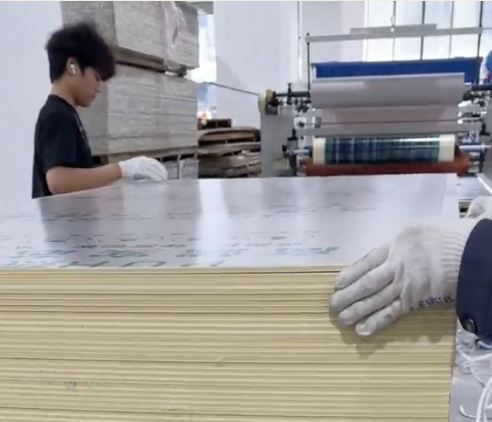
The goal is to confirm that the supplier’s claims match reality. Check the production lines, raw-material storage, finished-goods warehouse, quality-control area, packaging department, and employee organization. Ask to see the actual production line making your product rather than simply being shown a showroom filled with finished samples.
Conclusion
China remains one of the most important sourcing destinations for PVC wall panels and decorative interior wall materials, but choosing a manufacturer requires more than finding an attractive product photograph and requesting a quotation.
The market includes manufacturers specializing in PVC marble sheets, UV-coated panels, traditional PVC wall boards, decorative panels, and broader WPC/PVC product portfolios. Current 2026 industry coverage and manufacturer information highlight companies such as Haining Pansen, Haining Yike, Shandong Laimeng, Linyi Perfect, Shandong Aowei, Shanghai Yuanguan, Zhejiang Dingcheng, Jinhua Bingjie, Shandong Wanglu, and Retent as suppliers worth investigating.
The best manufacturer for your business will depend on your exact requirements. A hotel project may prioritize fire performance, VOC testing, surface durability, and reliable delivery. A residential renovation distributor may care more about price, design variety, packaging, and low MOQ. A private-label brand may place the greatest emphasis on OEM/ODM capability, custom colors, packaging, tooling, and consistent repeat production.
The safest approach is to create a technical specification, shortlist several factories, request identical samples, verify documentation, calculate landed costs, and inspect the production process before placing a substantial order. Do not choose a PVC wall panel supplier simply because it offers the lowest price. Choose the manufacturer that gives you the best combination of quality, consistency, customization, compliance, logistics, and total cost.
FAQs About PVC wall panels
1. What are PVC wall panels used for?
PVC wall panels are commonly used for residential and commercial interior decoration, including living rooms, bedrooms, kitchens, bathrooms, offices, retail stores, hotels, restaurants, and feature walls. Depending on their construction and certification, some products are designed specifically for humid or demanding environments.
Manufacturers now offer marble, wood, stone, metallic, fluted, embossed, and other decorative finishes. PVC panels are popular because they can provide a decorative surface while generally being lightweight, easy to clean, and relatively quick to install.
2. Why should I buy PVC wall panels from China?
China offers a large manufacturing ecosystem with many suppliers, product designs, production technologies, and customization options. International buyers can find factories producing standard PVC panels as well as specialized products such as UV marble sheets, waterproof panels, fluted wall systems, and private-label products. Chinese manufacturers also have extensive export experience in many markets.
However, supplier verification remains essential because quality and manufacturing capabilities can vary substantially between factories.
3. What is the difference between PVC wall panels and PVC marble sheets?
A PVC marble sheet is a specific type of decorative PVC wall panel designed to imitate natural marble or stone. It commonly uses a printed or decorative surface combined with a PVC/mineral-based substrate and may include a protective or UV-coated surface.
Traditional PVC wall panels can have simpler structures and may be designed for different applications. Buyers should always ask for the exact product construction rather than assuming all PVC panels have the same material composition.
4. How do I check the quality of a Chinese PVC wall panel manufacturer?
Start by requesting product specifications, samples, test reports, certifications, factory photographs, production information, and references where available. Compare the physical samples carefully and verify whether the documentation applies to the exact product you intend to purchase.
For larger orders, consider a factory audit and pre-shipment inspection. You should also establish acceptable tolerances for thickness, dimensions, color, surface quality, packaging, and other important characteristics in the purchase agreement.
5. Can Chinese PVC wall panel manufacturers provide OEM and ODM services?
Yes. Many Chinese manufacturers offer some level of OEM or ODM customization, although the exact service varies from factory to factory. Possible options include private labeling, custom colors, decorative patterns, surface textures, dimensions, packaging, logos, and new product development.
Linyi Perfect, for example, explicitly states that it offers OEM and ODM services and supports customization from design to production. Always ask about tooling costs, MOQ, sample charges, production lead time, and ownership of custom designs before starting a customized project.